
4 hours·English
5.0(4)
Nassau: Private Swim with Pigs and Snorkeling Adventure
Free cancellationHotel pickup includedSnacks

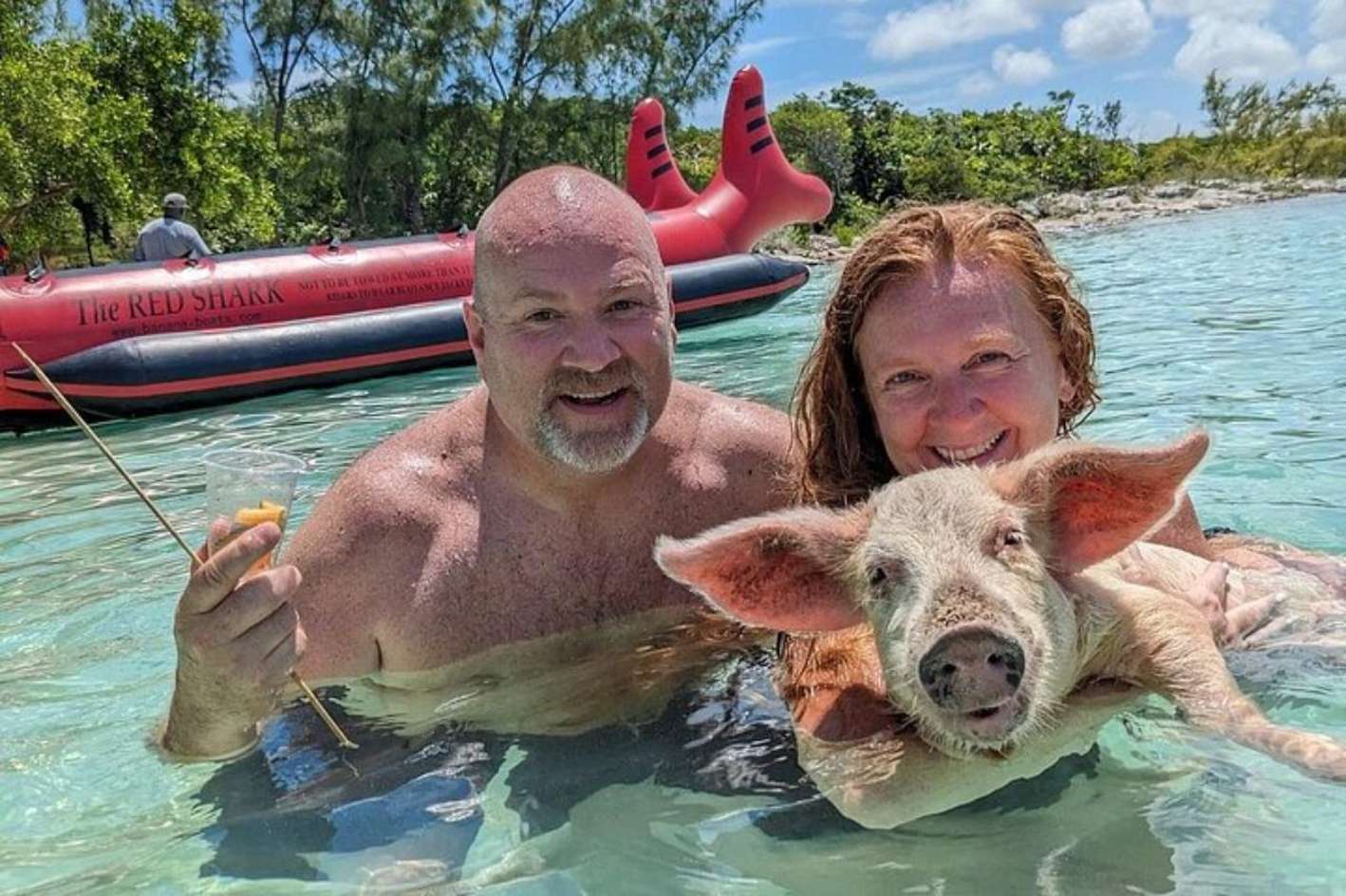
Find the real island with swimming pigs in the Bahamas, then book the boat that gets you there. Half-day tours from Nassau reach Rose Island in a 25-minute crossing, with snorkeling, turtles, rum punch and pig feeding in shallow water all handled for you. Thousands of travelers have already fed the pigs from a skewer this year, so pick your tour and lock in your morning slot before the boats fill.
"Captain Mario made our day. He was welcoming, took time to keep everyone safe, and checked that we were having fun. Would definitely book again."
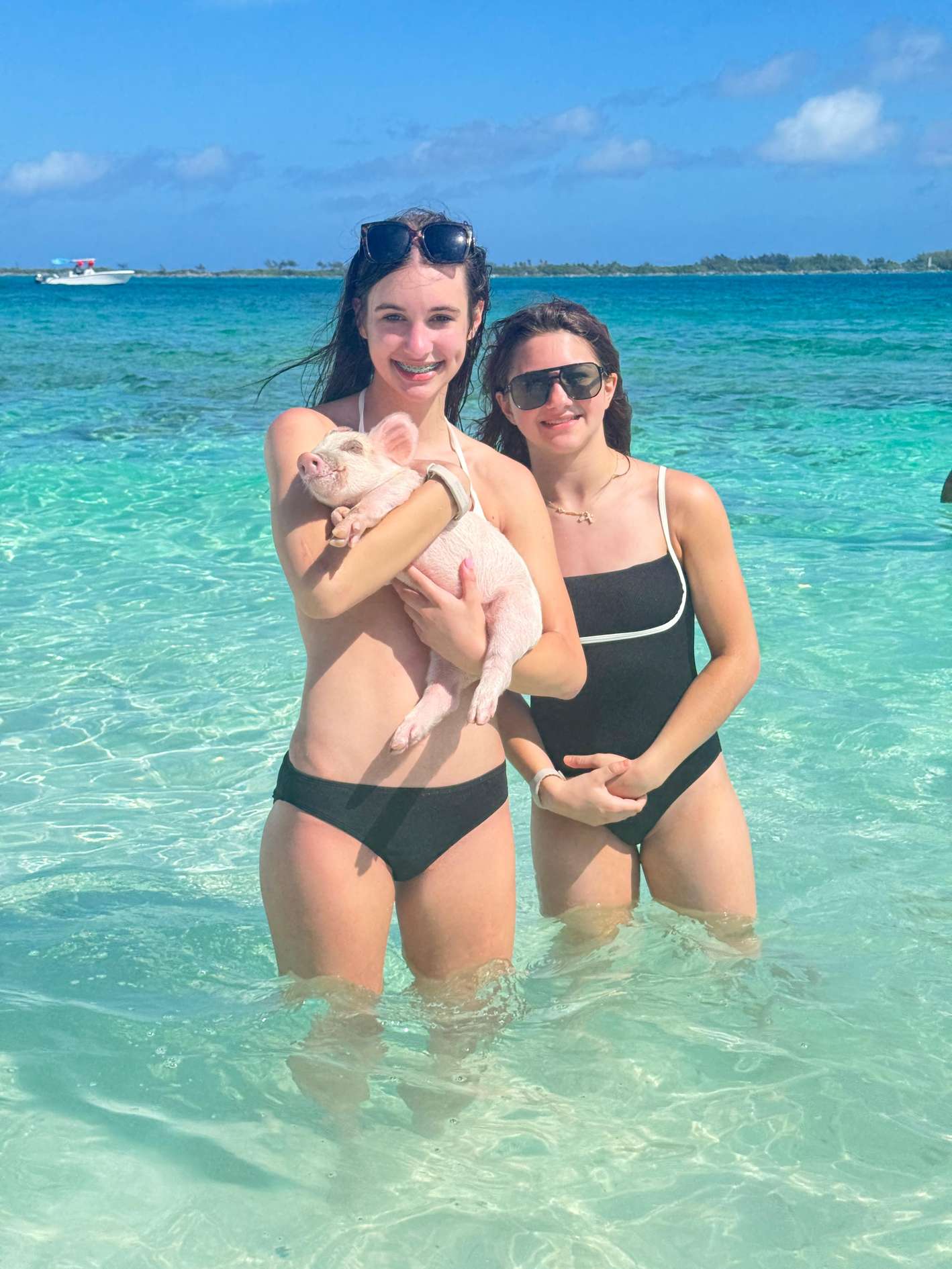
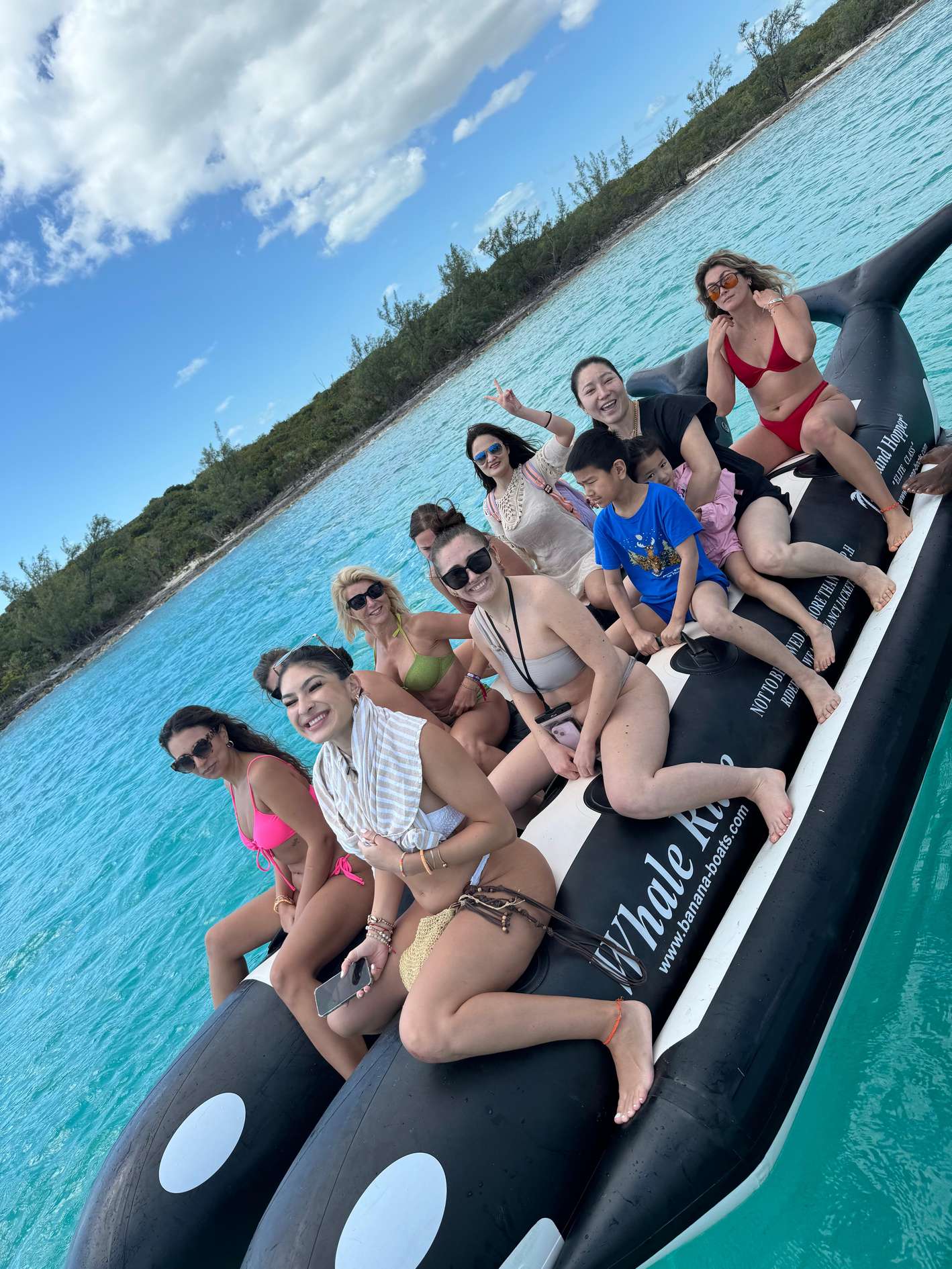
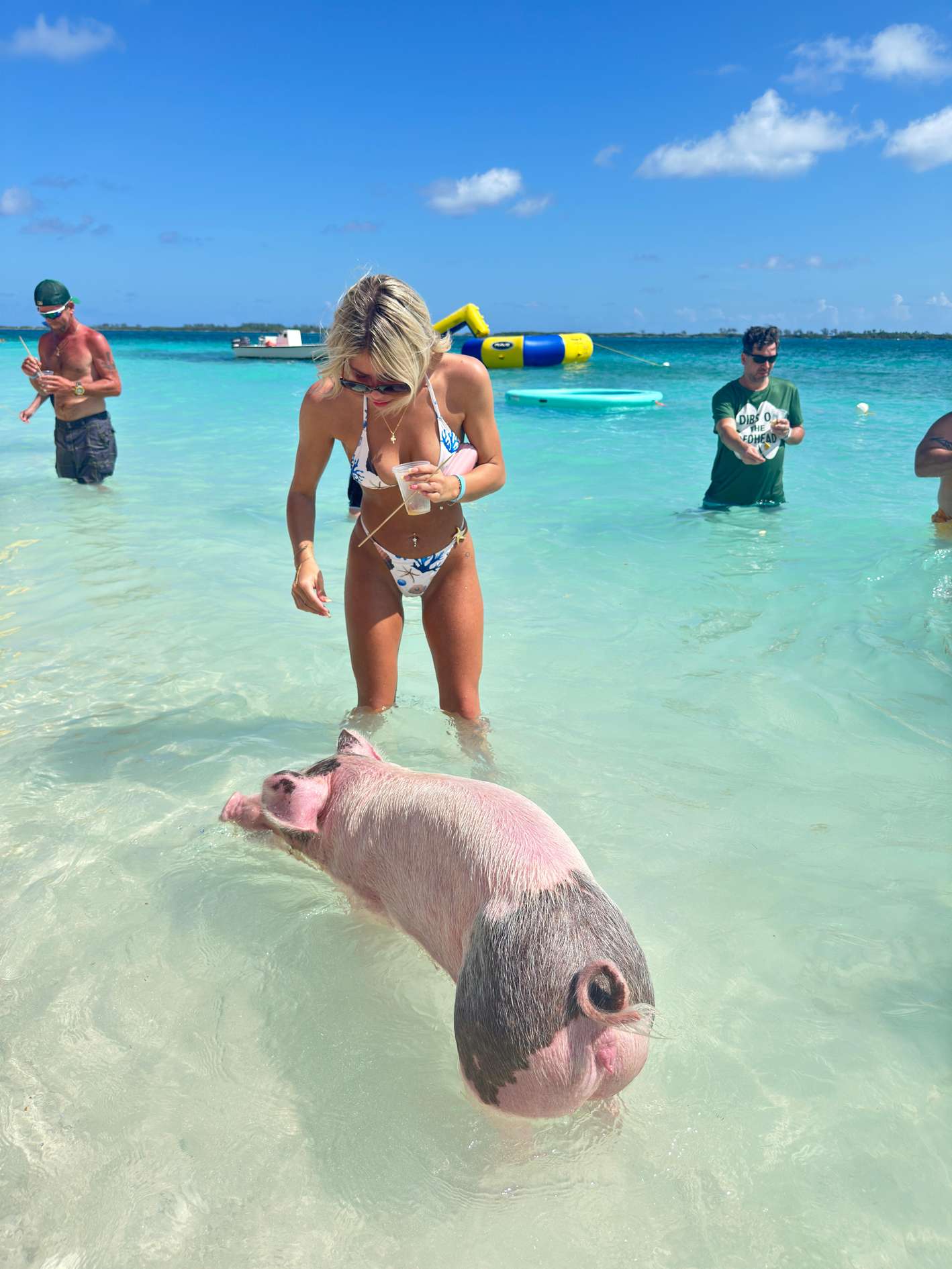
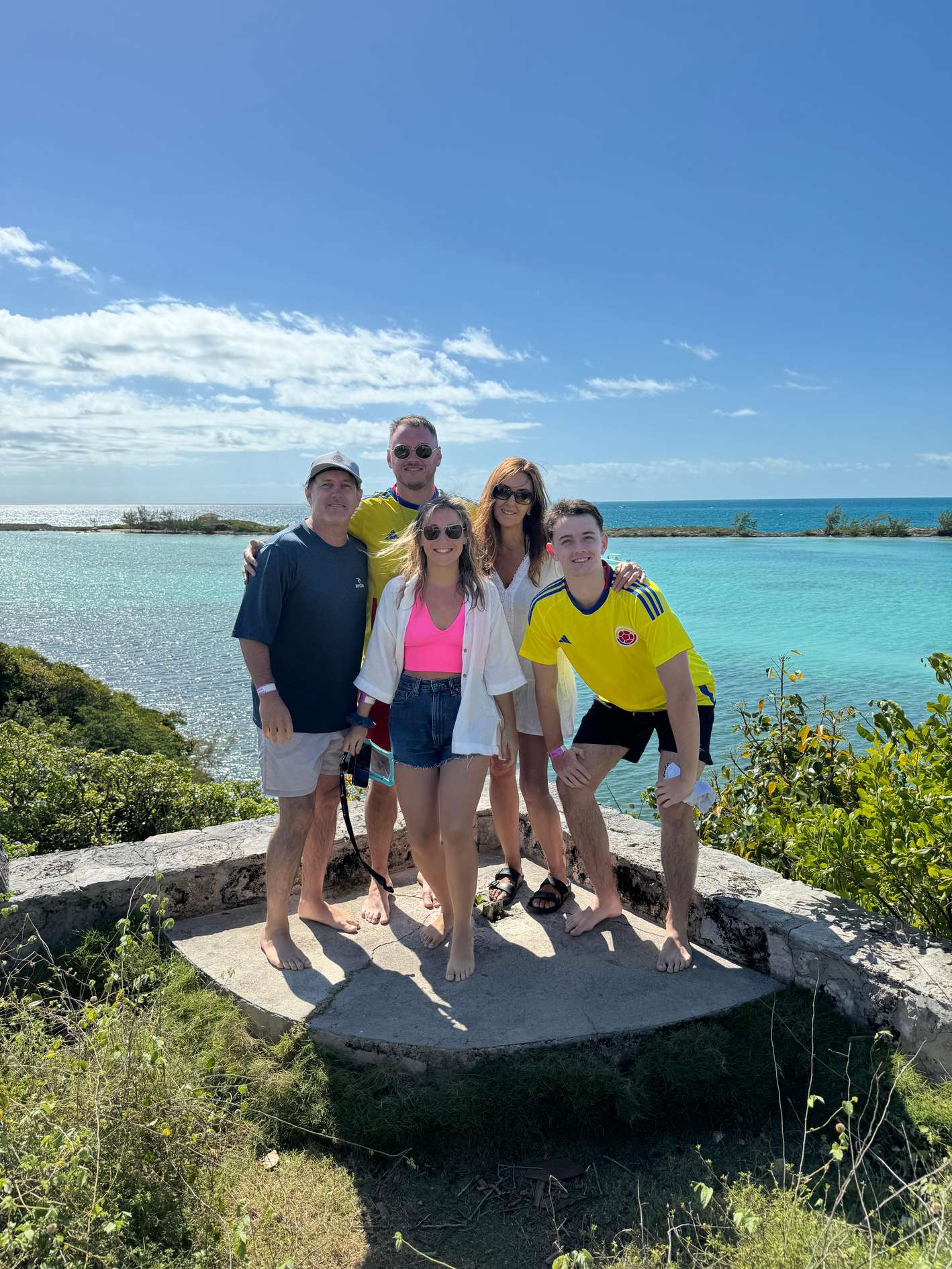

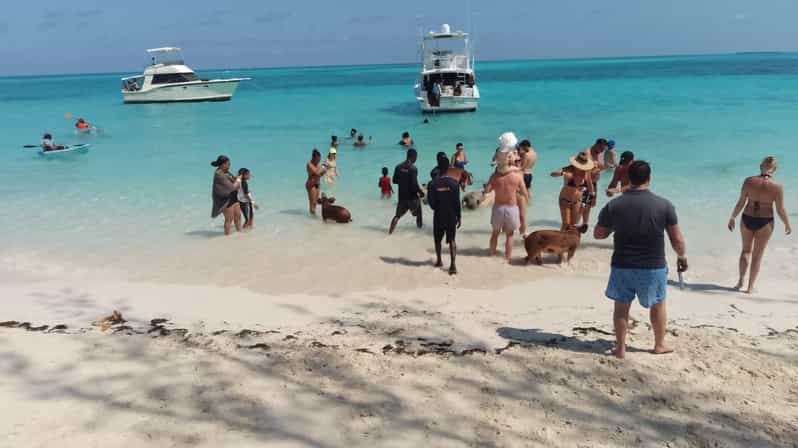

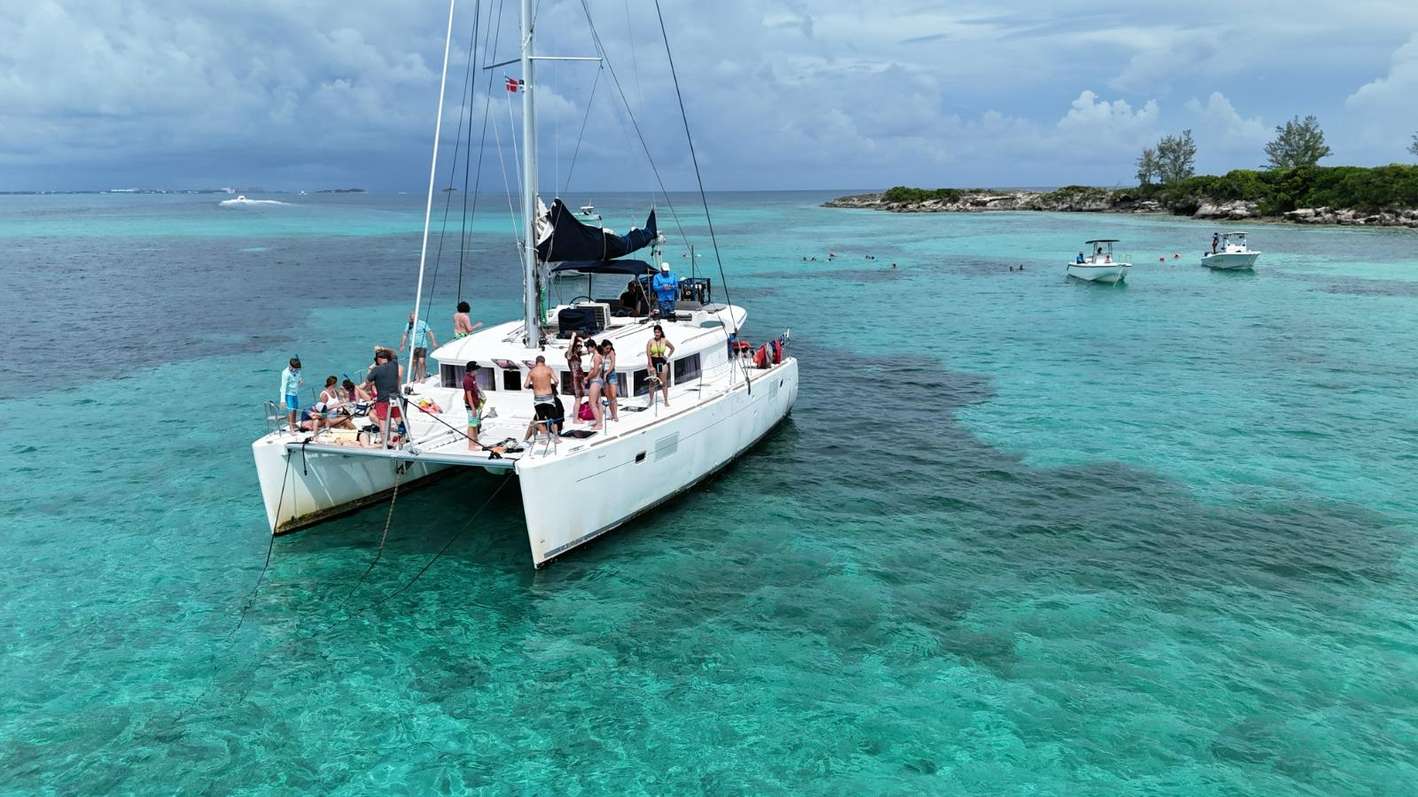



Big Major Cay is where the famous photos come from: about 20 free-roaming pigs on an island with no people, no roads and no docks.
Read the guide
Rose Island sits just off Nassau, an undeveloped island reached in a sheltered 20- to 30-minute boat ride, with beach clubs, hammocks and a timed pig session.
Read the guideTwo islands hold the pigs you have seen in the photos. Big Major Cay in Exuma is the original wild colony a full day away; Rose Island sits 25 minutes from Nassau with beach clubs and calmer water. The one that fits your schedule decides for you.
Both islands deliver the same moment, a pig paddling out to meet your boat. What changes is how far you ride and how much of your day it takes.
The original wild herd on an uninhabited cay, reachable only by a full-day commitment
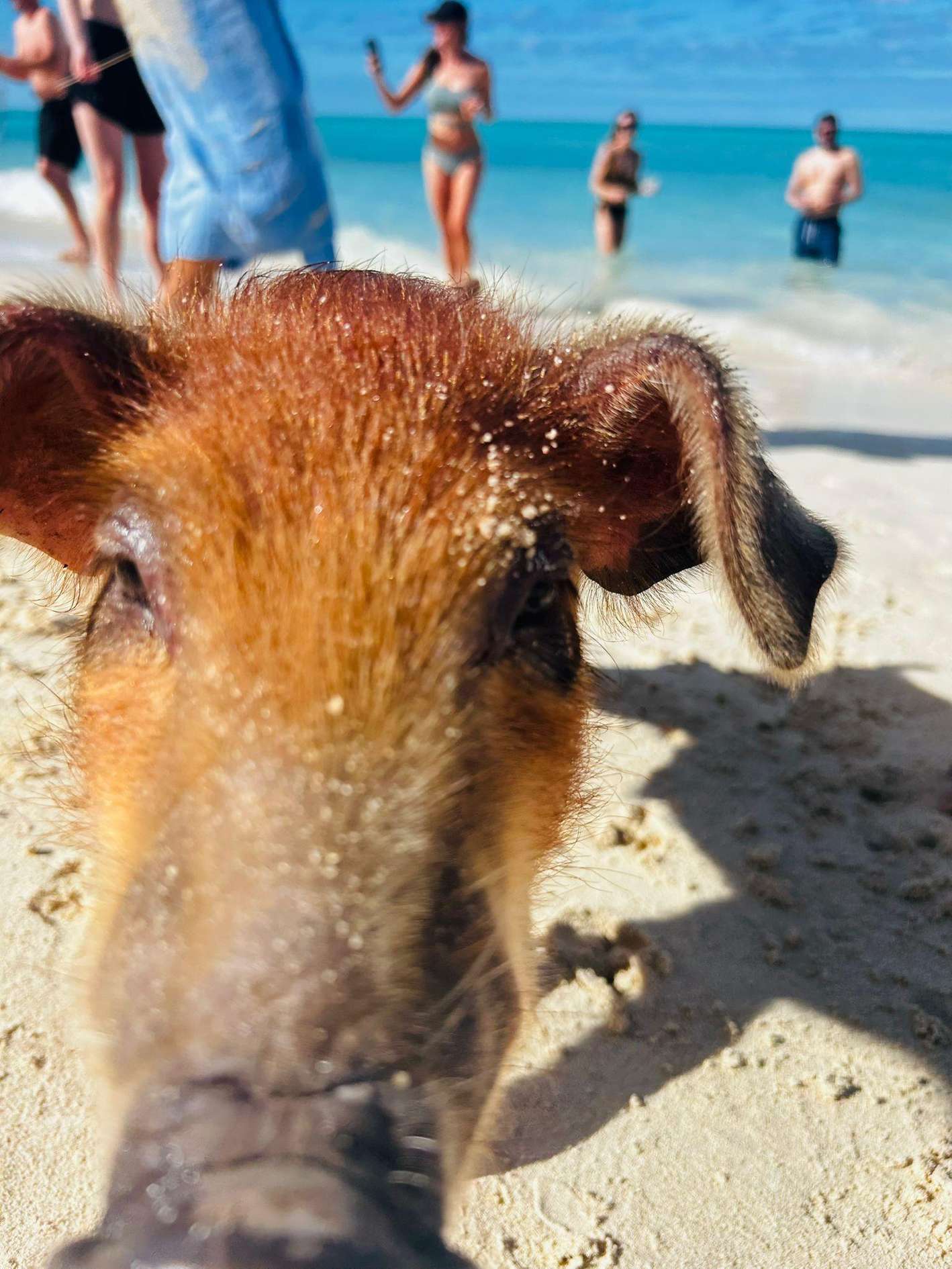
The pigs here roam free on an uninhabited island, and their story goes back to the early 1990s, when five piglets were brought over. About 20 animals live on the cay now.
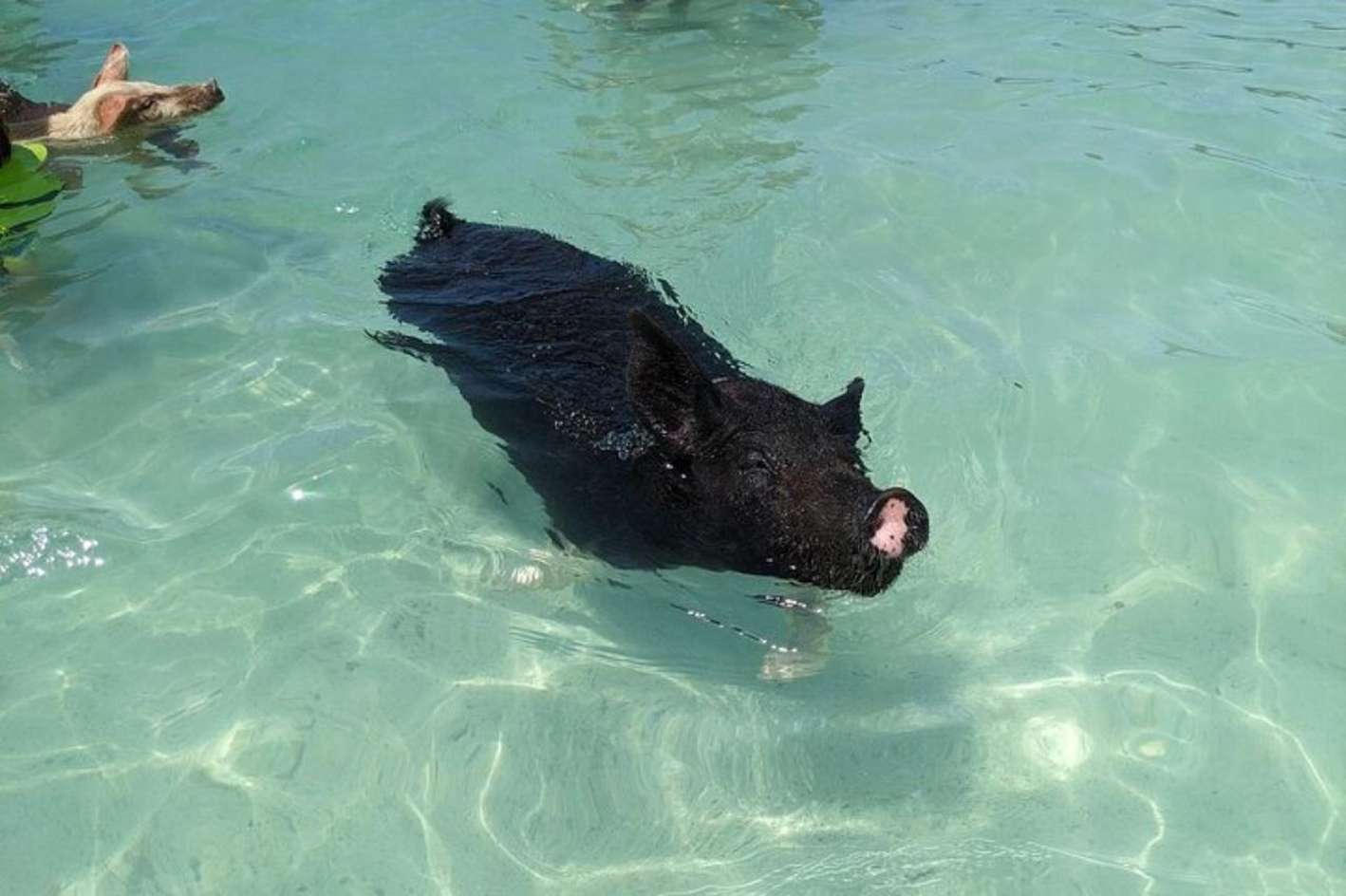
Most stay near the beach while a few strong swimmers paddle out to meet arriving boats, and they come because boat engines have always meant food.
Reaching it is the part to plan around. A speedboat crossing runs two to three hours each way over open water, so the full trip takes eight to nine hours, and winter cold fronts can make the ride wet and choppy enough that operators cancel or reschedule.
If your ship docks in Nassau for fewer than ten hours, this trip will not fit your port day.
Powder-soft sand, private beach clubs and pigs in waist-deep water, all inside half a day
The boat ride tells you why this island works for so many visitors. In under half an hour of sheltered water you step onto powder-soft sand at a private beach club, where lounge chairs, hammocks and restrooms wait.
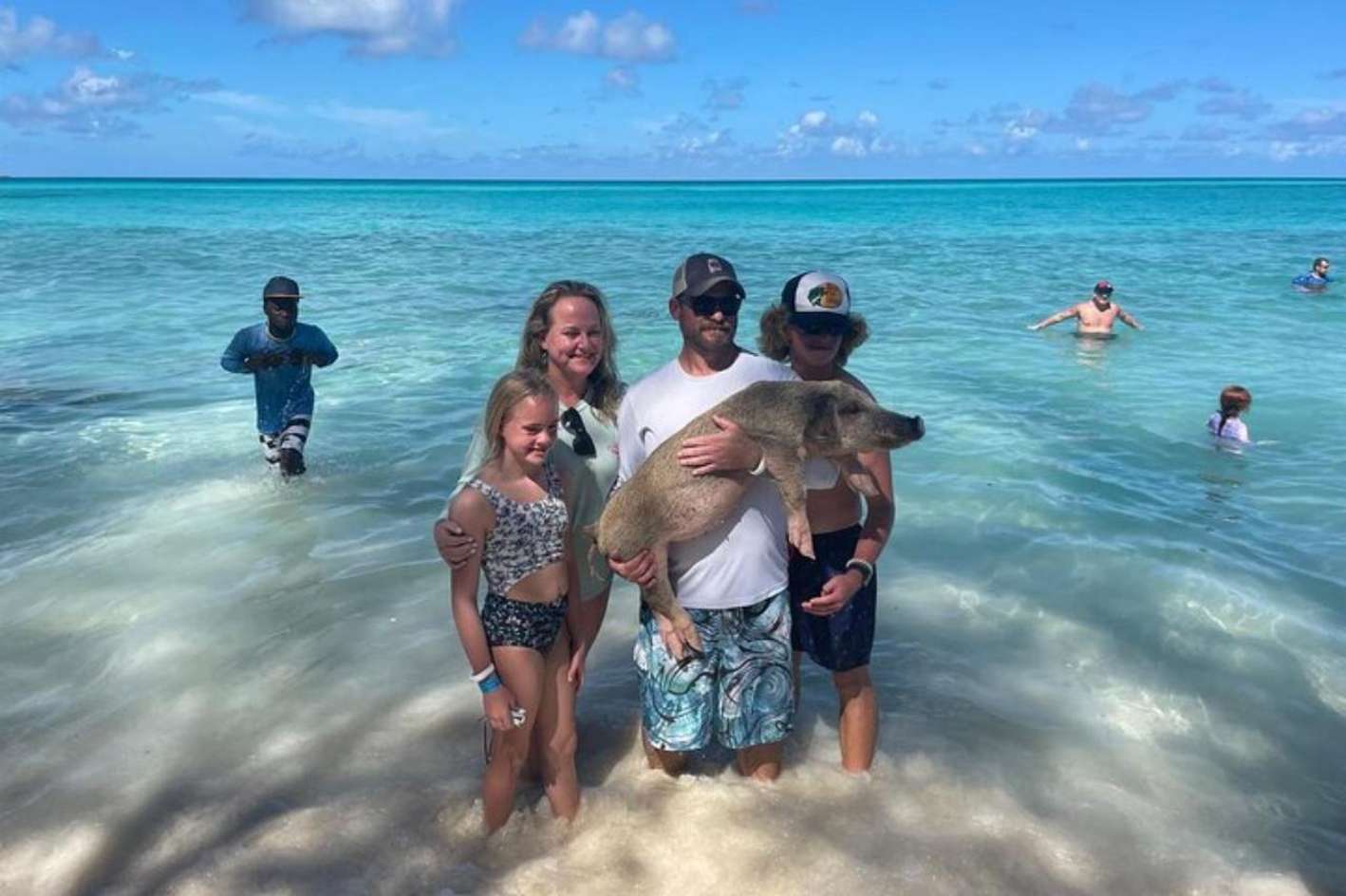
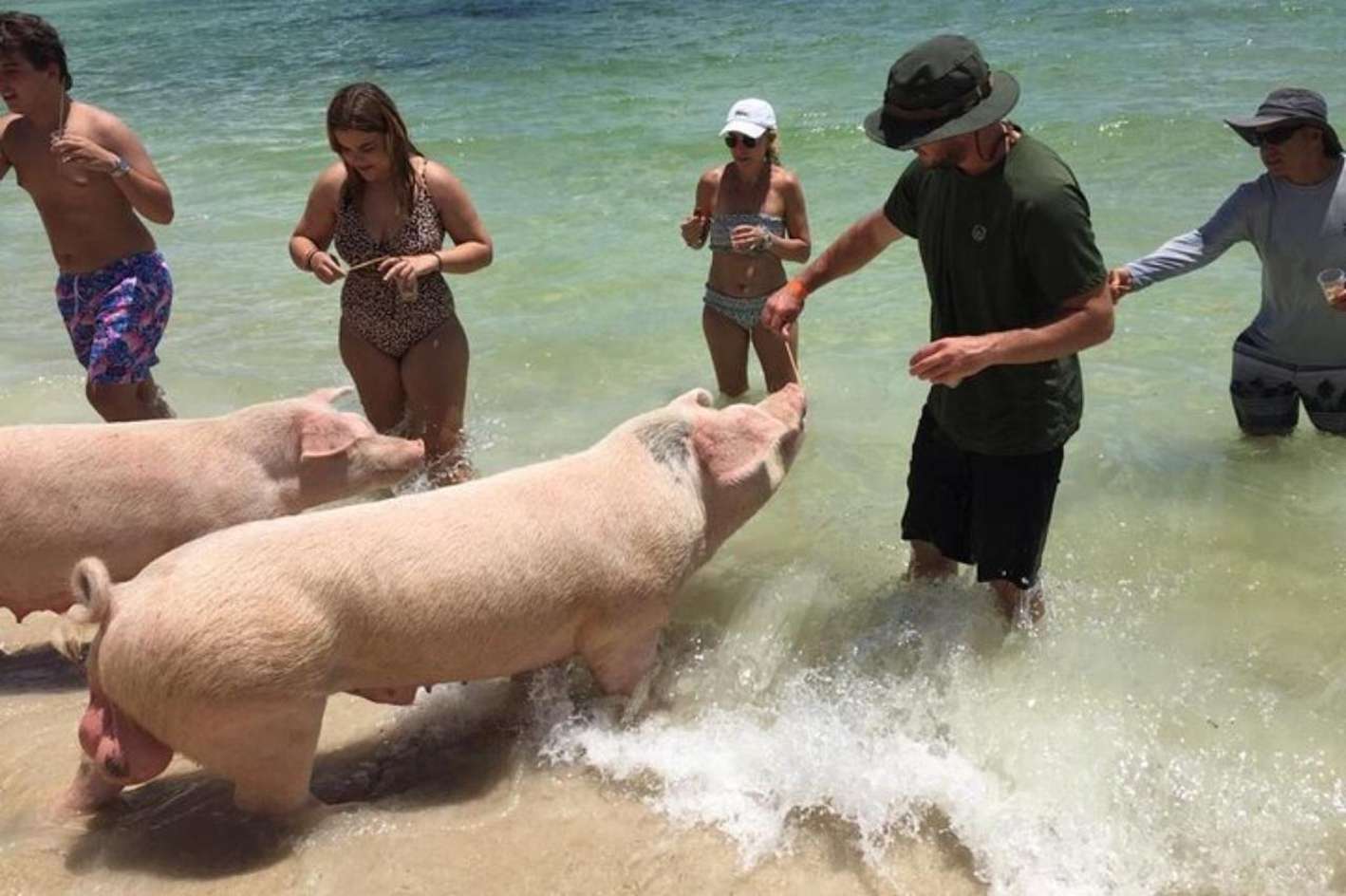
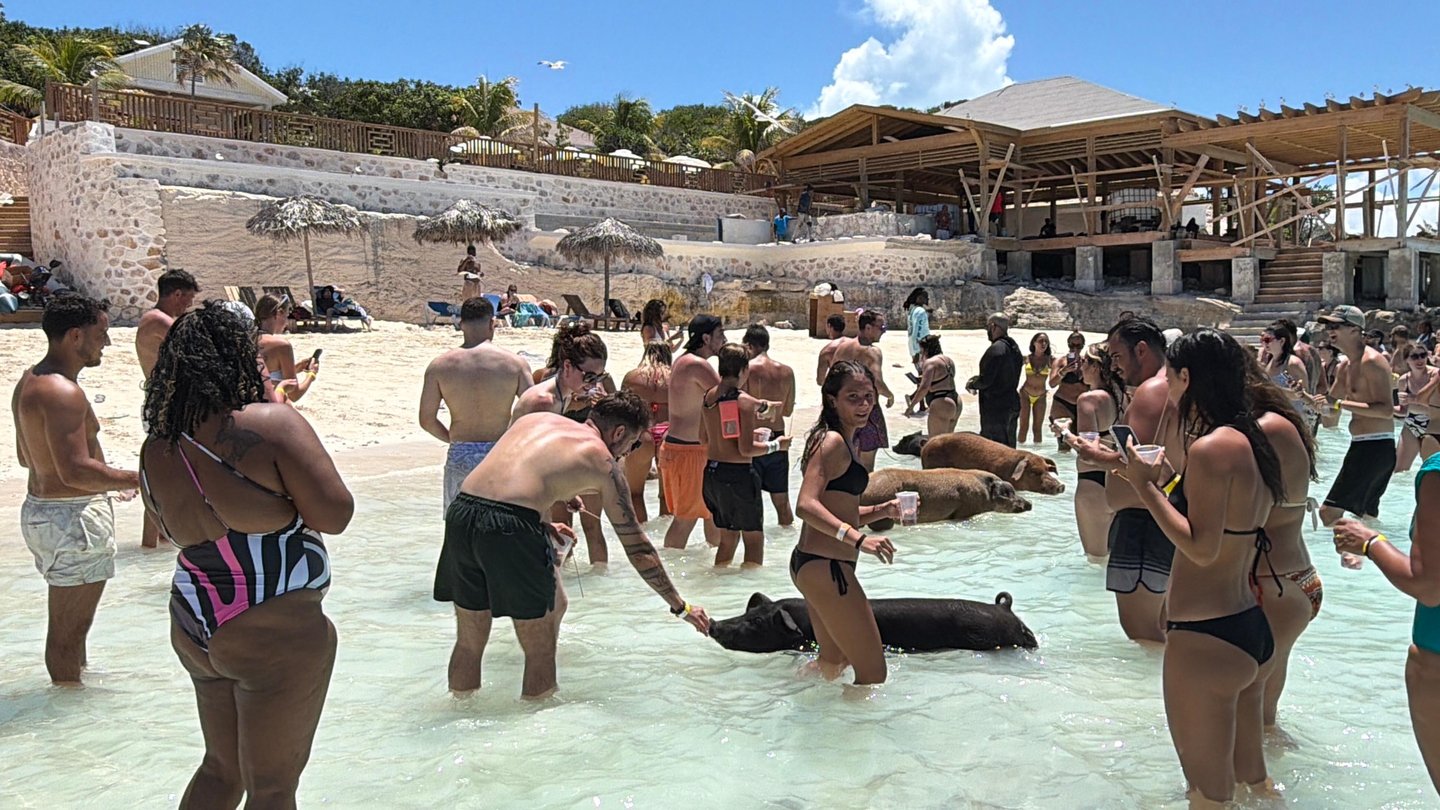
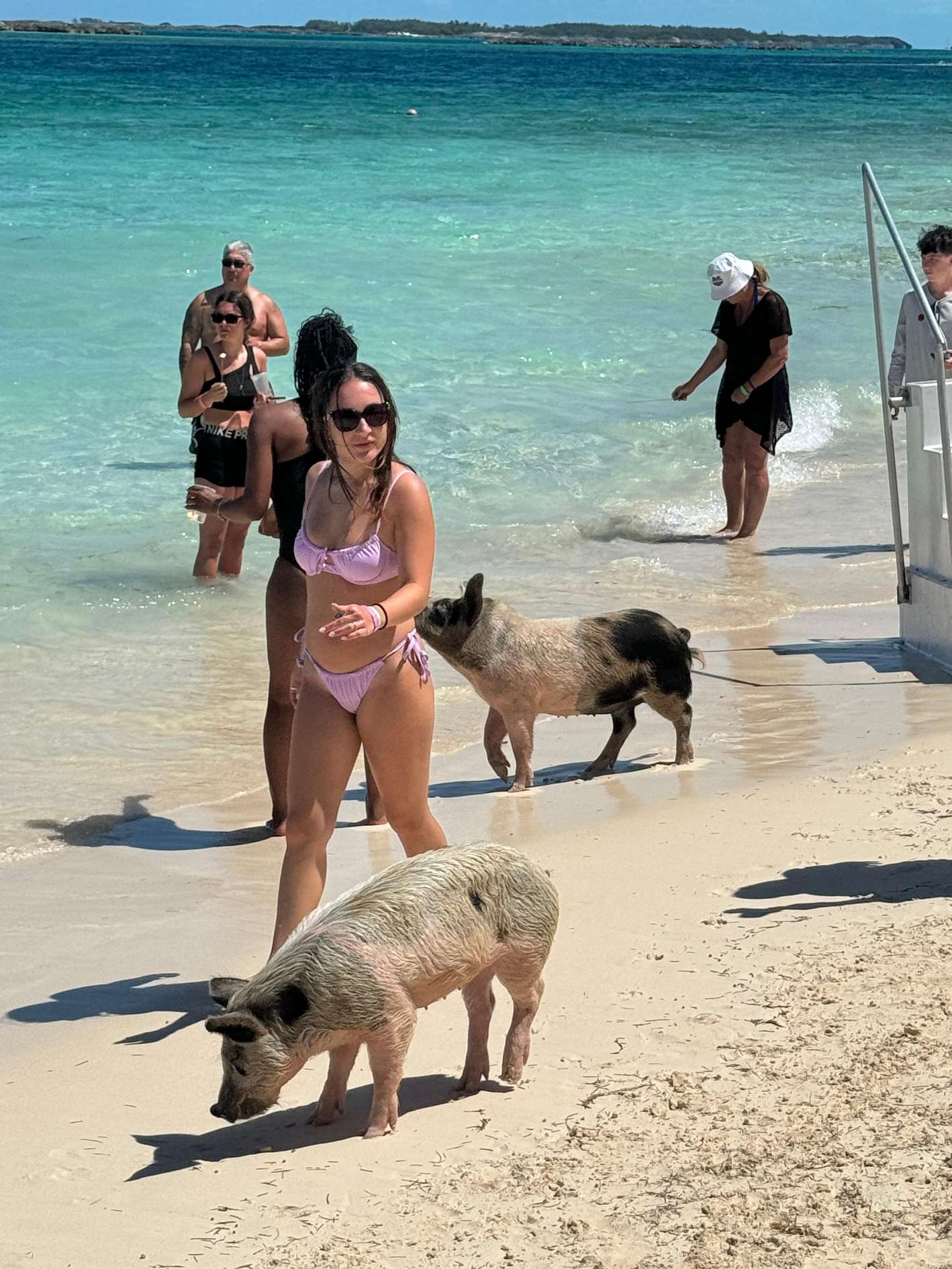
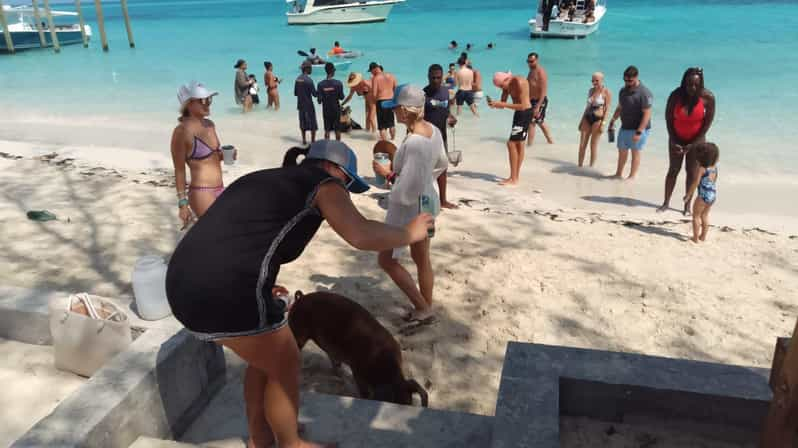
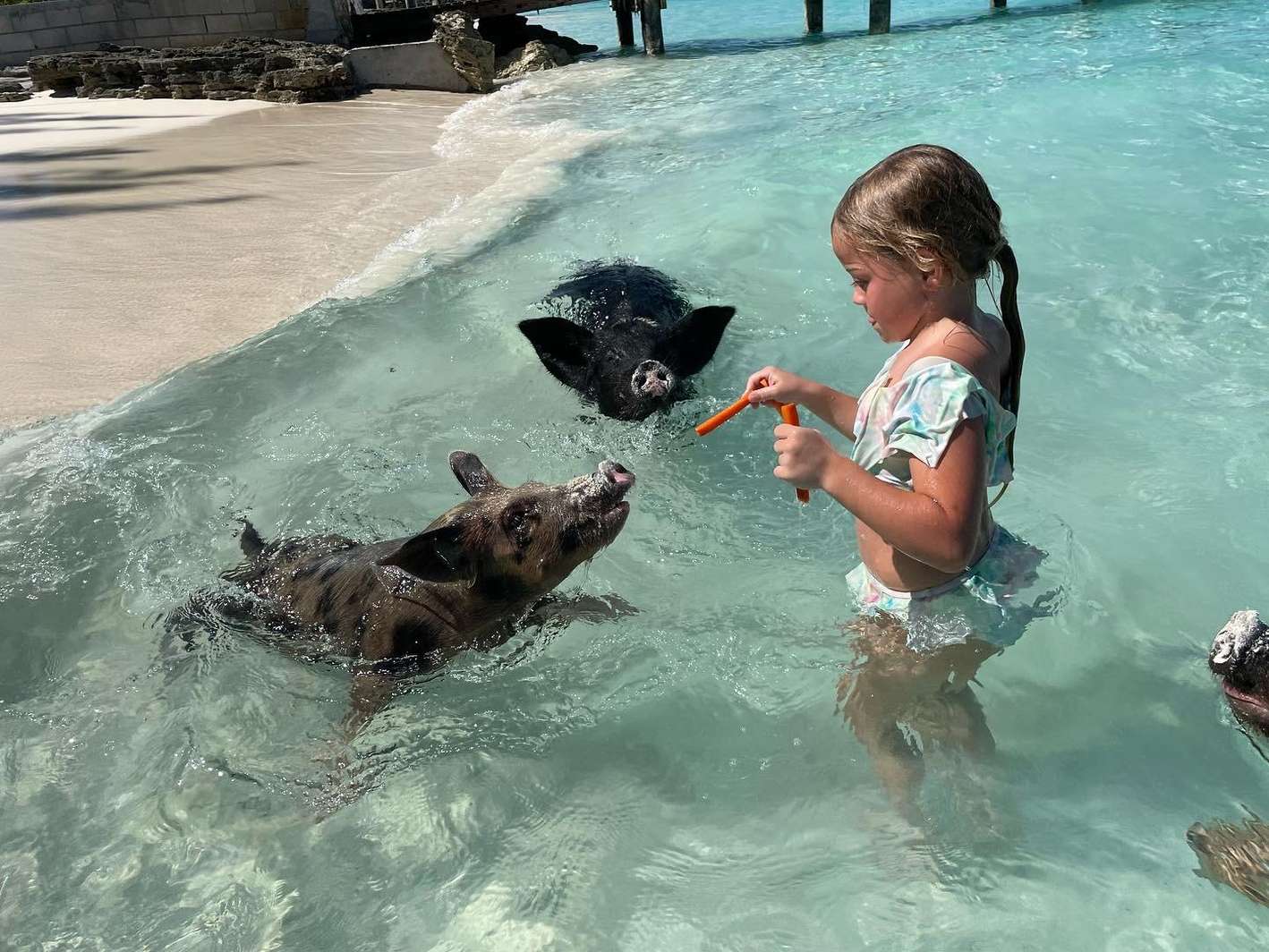
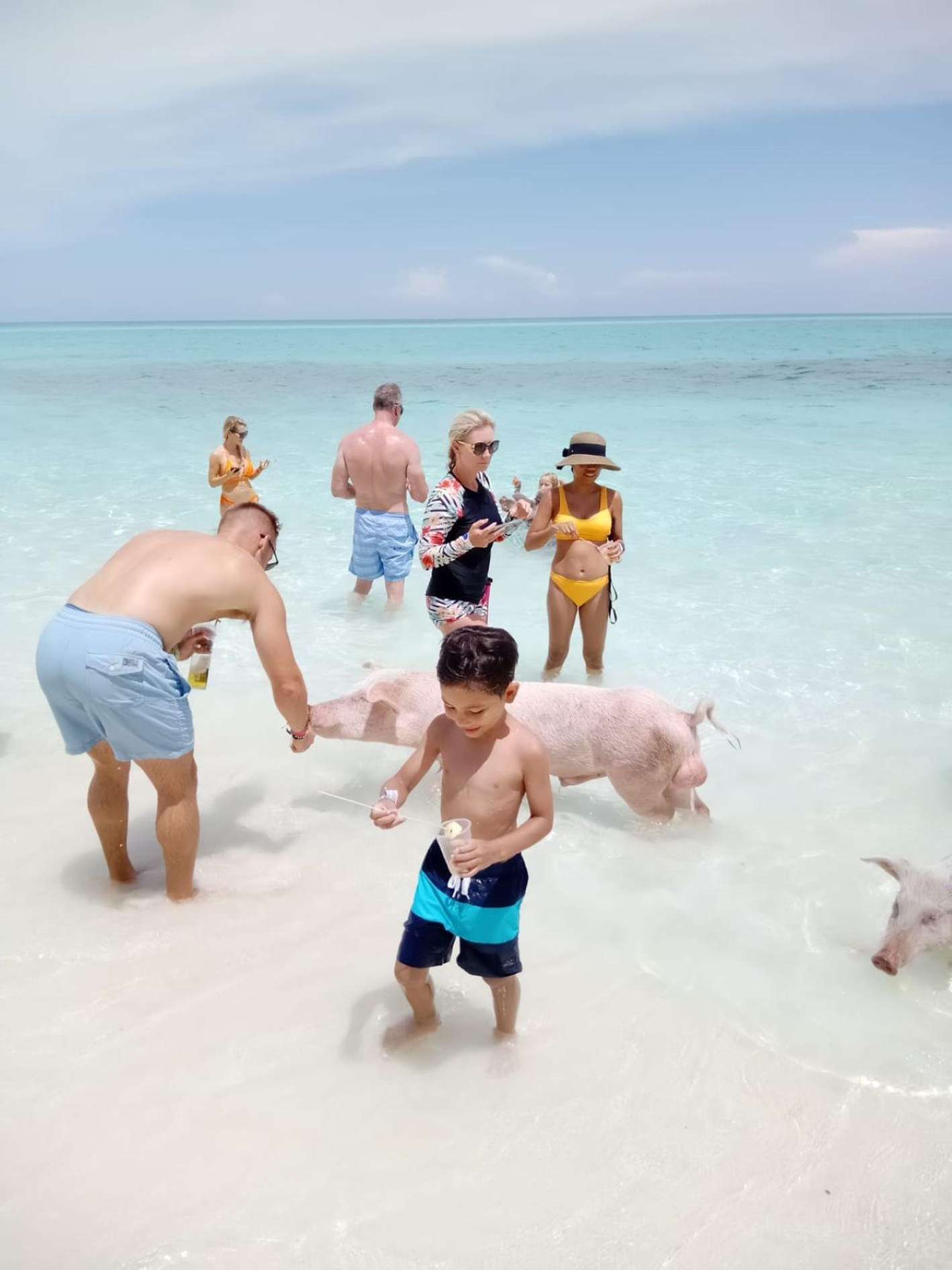
The pigs come out to shallow, waist-deep water for a timed feeding session of 20 to 30 minutes, and staff hand out skewered apple slices so nobody offers food from an open hand.
The rest of your two or three hours on the island is yours: lunch, a swim, snorkeling off the club's own reef. Nearly every tour fits a standard cruise day with hours to spare before all aboard. Winter fronts can still cancel crossings, but operators refund or reschedule when they do.
5.5 hours · ★ 4.8 (1,080)Nassau: Snorkeling, Pig Beach, Swim with Turtles, and LunchFrom $141 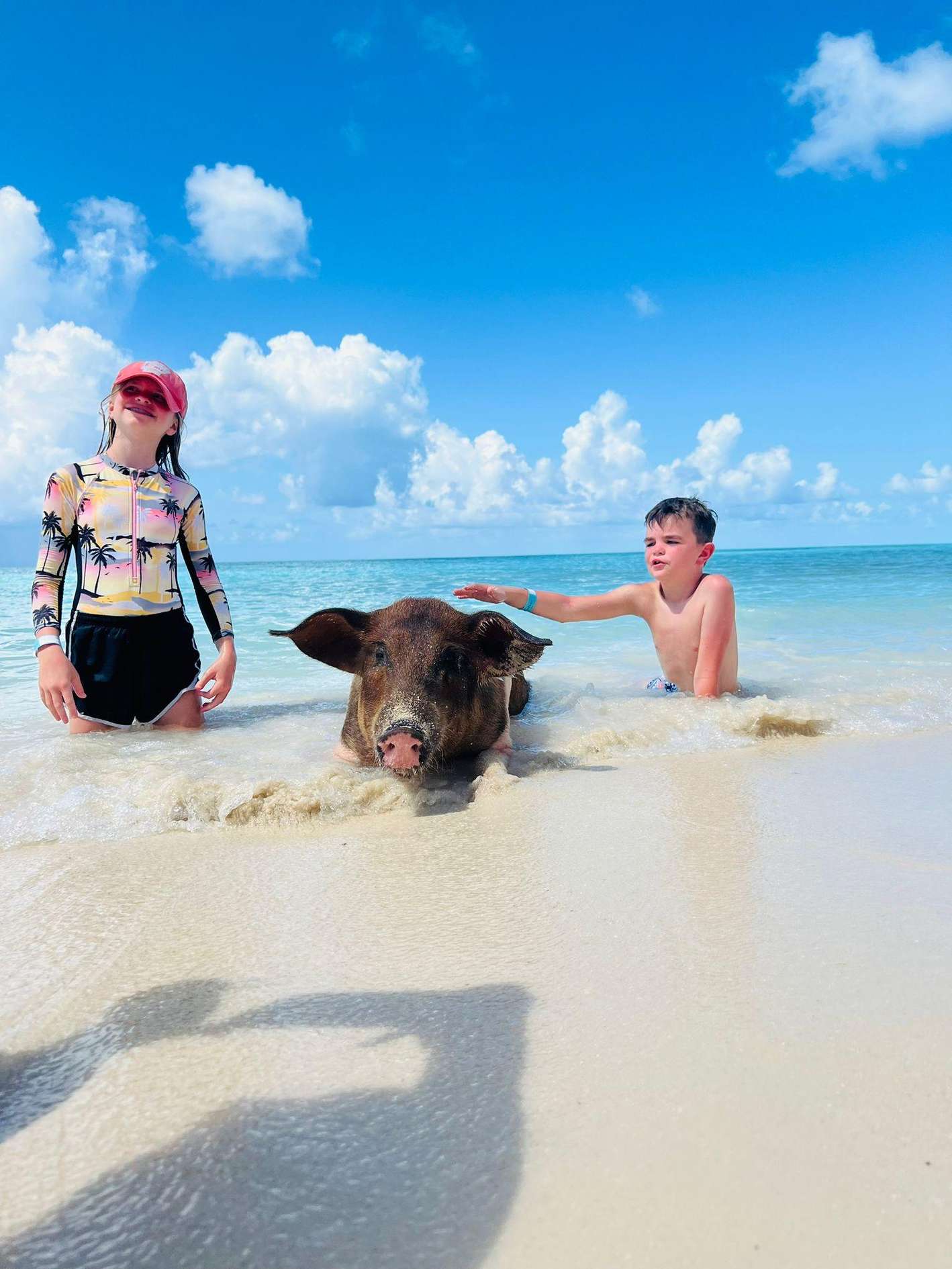 4 hours · ★ 4.8 (10)Nassau: Half-Day Swimming Pigs, Reef Snorkel & Beach ClubFrom $198
 4 hours · ★ 4.7 (79)Nassau: Swimming Pigs and Private Beach Club Trip with LunchFrom $139
 4 hours · ★ 4.6 (51)Nassau: Swimming Pigs And Snorkel With TurtlesFrom $150
boat engines mean food to the pigs
The pigs live on more than one island, and the island you pick decides your whole day. Twenty sheltered minutes from the cruise gates puts you on Rose Island sand; the original colony in Exuma asks for two hours of open ocean each way.
There is no single pig island: pigs swim on Big Major Cay in the Exumas, on Rose, Athol and Pearl Islands off Nassau, at Crystal Beach on Grand Bahama, and on a few small out-islands.
The original colony on Big Major Cay takes two to three hours of open-water crossing each way, an eight-to-nine-hour day.
Rose Island sits six miles from the Nassau Cruise Port, a 20-to-30-minute sheltered boat ride, with a half-day format that fits any cruise window.
Cruise passengers with a standard port call cannot fit Exuma; ships need ten hours or more in port.
Most Nassau pig tours sell out two to four weeks ahead from December through April, so book early and pick a morning boat for hungry pigs.
Book a morning departure, when seas are usually calmer, and keep a flexible day in your plan. If bad weather cancels the trip, tour operators give a full refund or move you to another departure, so you lose nothing but the time.
The first surprise is a sound: hooves on sand, then splashing, as pigs paddle out to a hull they have learned means food. Most people expect that scene to happen in one famous spot. It happens in several.
Big Major Cay in the Exumas is the original, an uninhabited island where about twenty pigs and piglets roam free, and their story goes back to the early 1990s, when five piglets were brought over.
Reaching it is the whole project: roughly 82 to 89 miles southeast of Nassau, two to three hours each way by speedboat. The full story lives in the Exuma guide.
Pigs swim on at least six other islands, and the ones closest to Nassau are closer than most people imagine. Rose, Athol and Pearl Islands all host pig encounters six miles or so from the cruise port, reached in 20 to 30 minutes by boat.
Grand Bahama has its own colony at Crystal Beach near Freeport, and smaller ones sit at Meeks Patch near Spanish Wells and on Long Island, where boats run out of Deadman's Cay.
Two more names belong on the map for cruise passengers. The cruise lines' private islands run pig excursions only for their own guests, so Royal Caribbean and Norwegian passengers book through the ship while everyone else looks elsewhere.
The rest of the map is open to anyone with a boat ticket, and picking between it all is simpler than it looks.
Three clocks decide everything: how long you have, how much bouncing you will accept on the water, and whether a ship is waiting. Run your day against them before you look at a single tour.
If a cruise ship sets your deadline, the Exuma round trip will not fit. It runs eight to nine hours, and standard Nassau calls last seven to nine, so operators themselves refuse cruise guests on those departures.
That leaves the near islands, and they are designed around exactly this problem: half-day tours, sheltered water, early returns.
Rose Island is the half-day answer for most readers, a 20-to-30-minute crossing each way with domesticated pigs at private beach clubs. Pearl Island runs a 25-minute catamaran ferry and bundles lunch and water toys.
Staying or docking in Freeport puts you closest of all: the pigs at Crystal Beach sit a 30-to-40-minute drive from the harbour, with no boat involved.
| Transit from port | Pig setting | Sea crossing | Tour length and cost | Cruise port fit | |
|---|---|---|---|---|---|
| Exuma Pig Beach | 2-3 hr each way, 82-89 mi | ~20 free-roaming pigs, uninhabited cay | Open-ocean, wind-exposed crossing | not known | Not for cruise passengers |
| Rose Island | 20-30 min boat each way | Domesticated pigs at beach clubs | Sheltered nearshore route | Half-day tour, less expensive | Fits cruise windows with buffer |
| Pearl Island | 25-min catamaran ferry | Pigs greet boats in shallows | Short sheltered crossing | Lunch included, Aqua Park extra | not known |
| Grand Bahama | 30-40 min drive from Freeport | Pigs released from pens to feed | not known | not known | not known |
| Cruise line private islands | 5-10 min boat to Treasure Island | Pigs in beachside paddocks | Shore excursion only | Cruise-line guests only, age 5+ | Exclusive to Royal Caribbean or NCL |
The Exuma day remains the prestige option for people with a full free day, and the out-island scenery justifies the haul: white sandbars, nurse sharks, iguanas, water so clear you can read the bottom.
The Exuma guide covers that trip in full, and the Rose Island guide covers the half-day. Reaching Meeks Patch from Nassau independently means a two-hour ferry plus a local charter, which is why almost nobody does it that way.
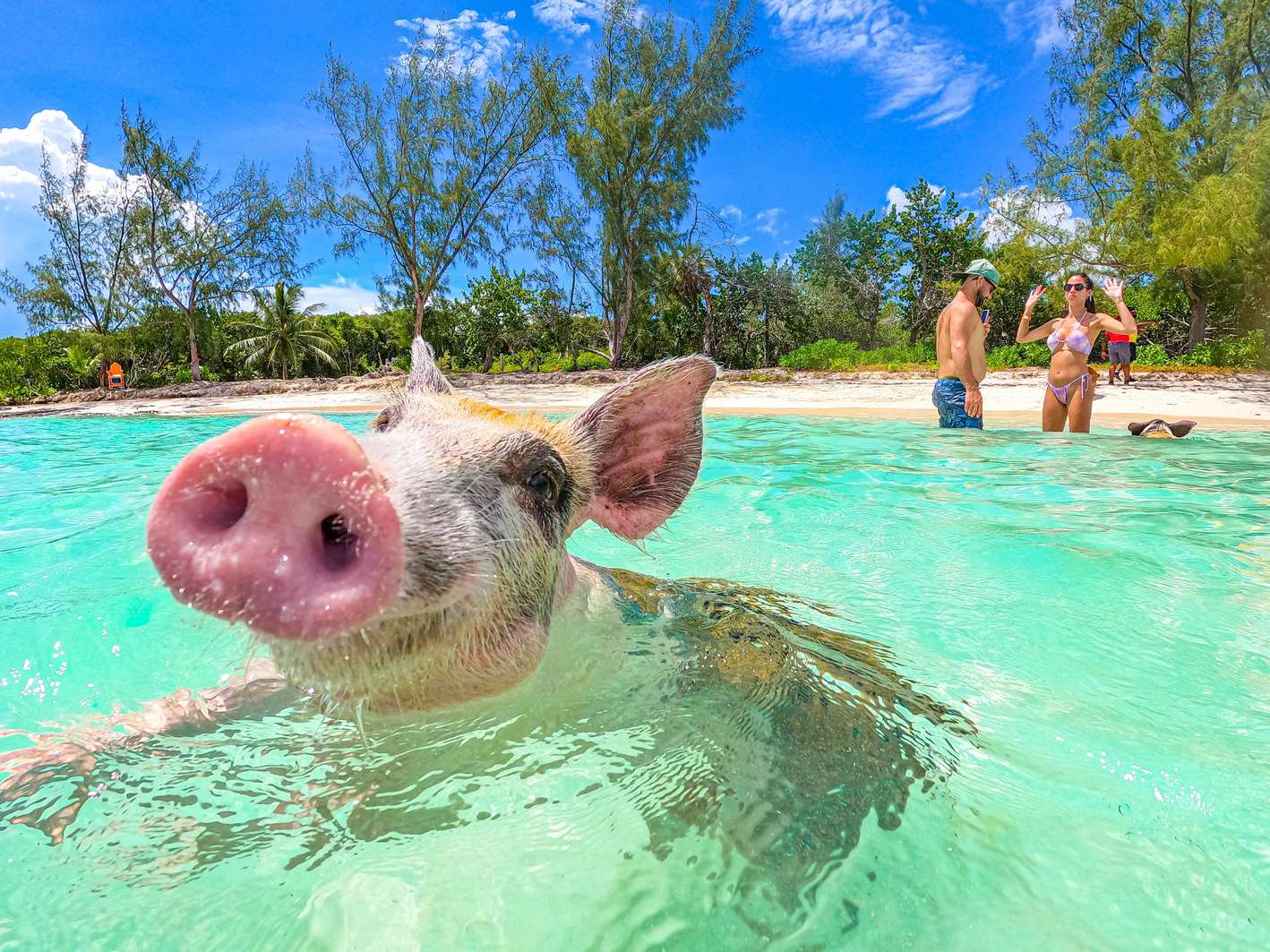
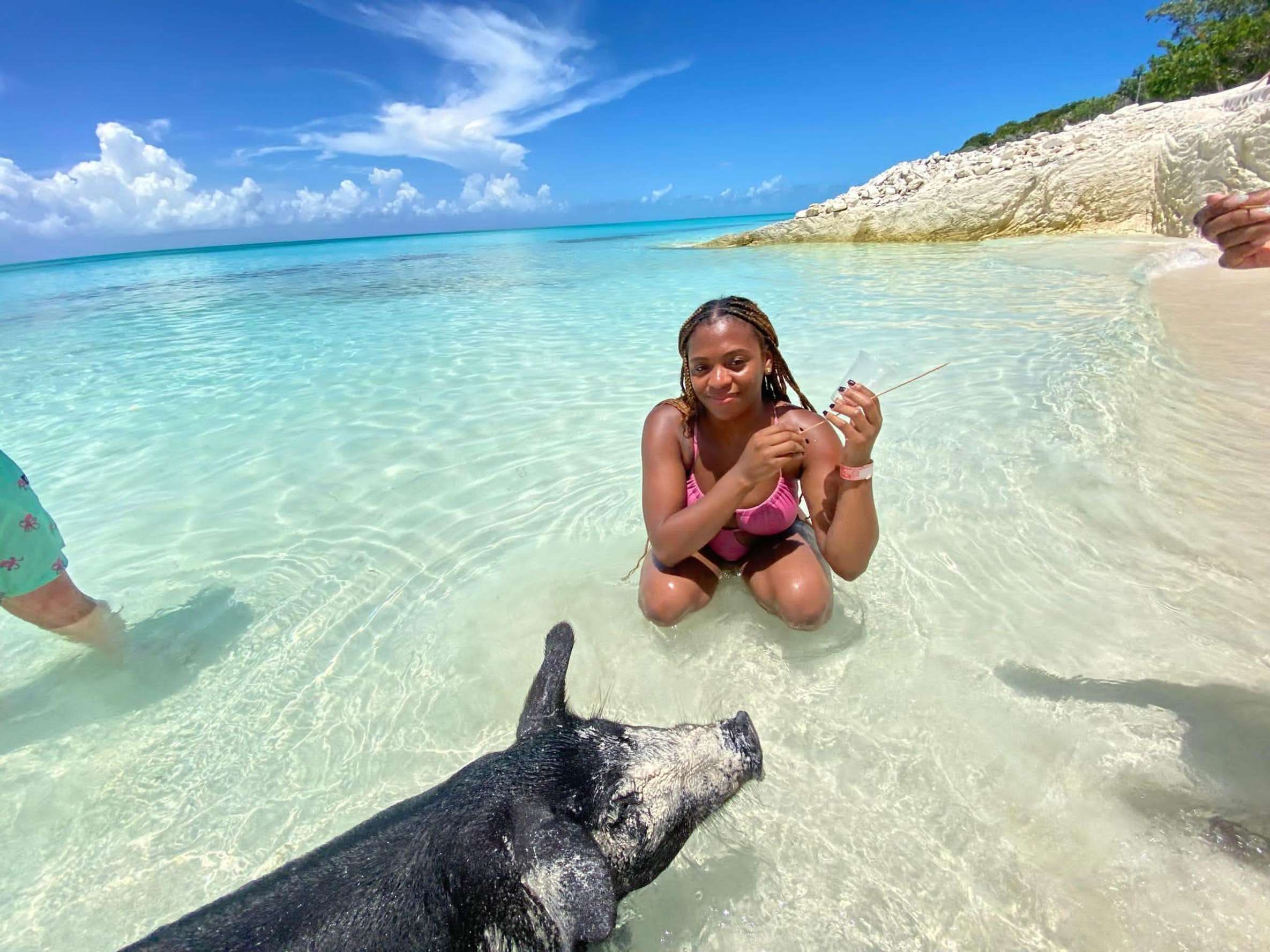
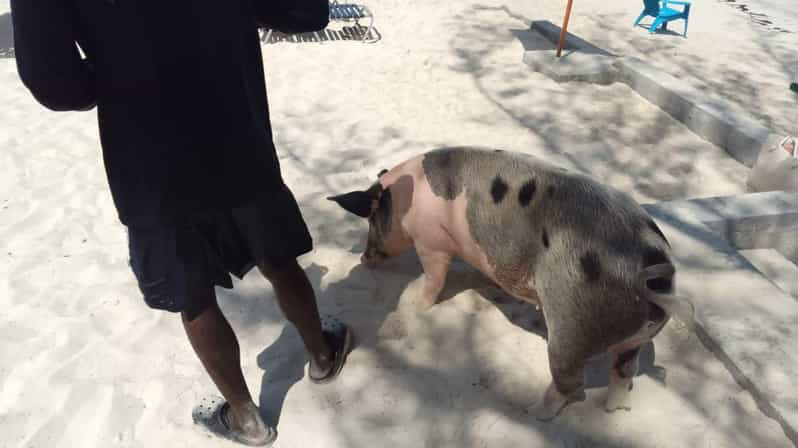
Big Major Cay has no roads, no residents and no dock, only an empty beach where a few dozen hoofprints collect by mid-morning.
About twenty pigs live there, descended from stock brought over in the early 1990s, and nobody knows for certain how the first animals arrived. Sailors' leftovers, a shipwreck, locals moving their pens: the stories compete and the pigs do not say.
The day is long.
Speedboats leave Nassau around 8 am or 9 am and cross 82 to 89 miles of open Exuma Sound, taking two to three hours each way, with boats back between 4:30 pm and 5 pm The crossing is the price of the original colony, and it can turn bumpy and wet on windy days.
The reward is scenery Nassau cannot match: water clear enough to read the bottom from the boat, white sandbars that surface with the tide, and stops at Compass Cay to swim with nurse sharks, Bitter Guana Cay to feed endangered rock iguanas, and Staniel Cay for lunch.
Keep your hands empty and visible on the beach itself, feed nothing from an open palm, and never carry loose snacks into the water, because the big ones nudge, nip and knock when food is involved. Most pigs stay on the sand; only the largest paddle out to the boats.
Cruise passengers, read this once and plan around it: a standard port call will not fit this trip unless your ship stays ten hours or more, and several operators simply refuse cruise guests. Everyone else books the Exuma guide version of the day.
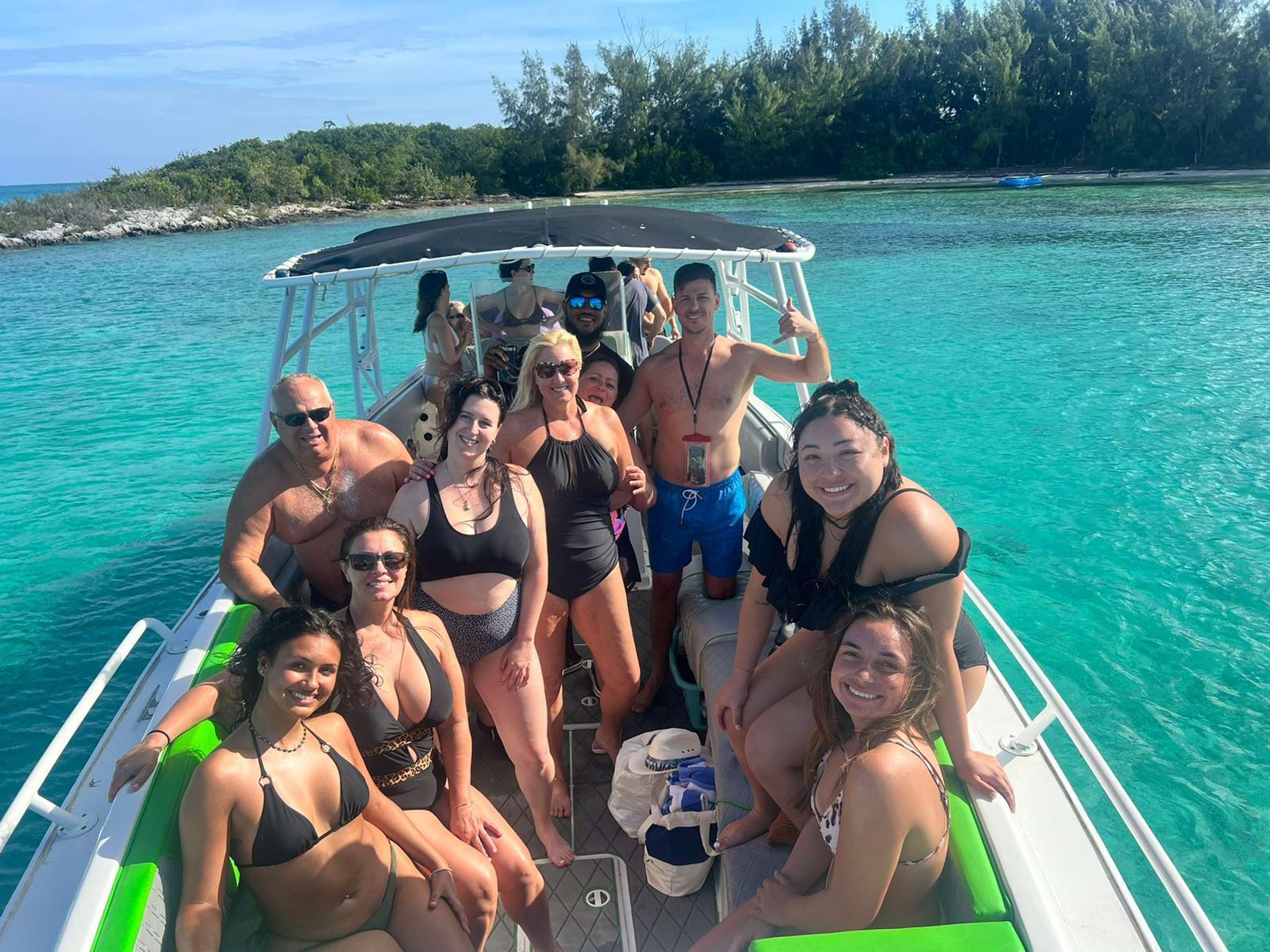
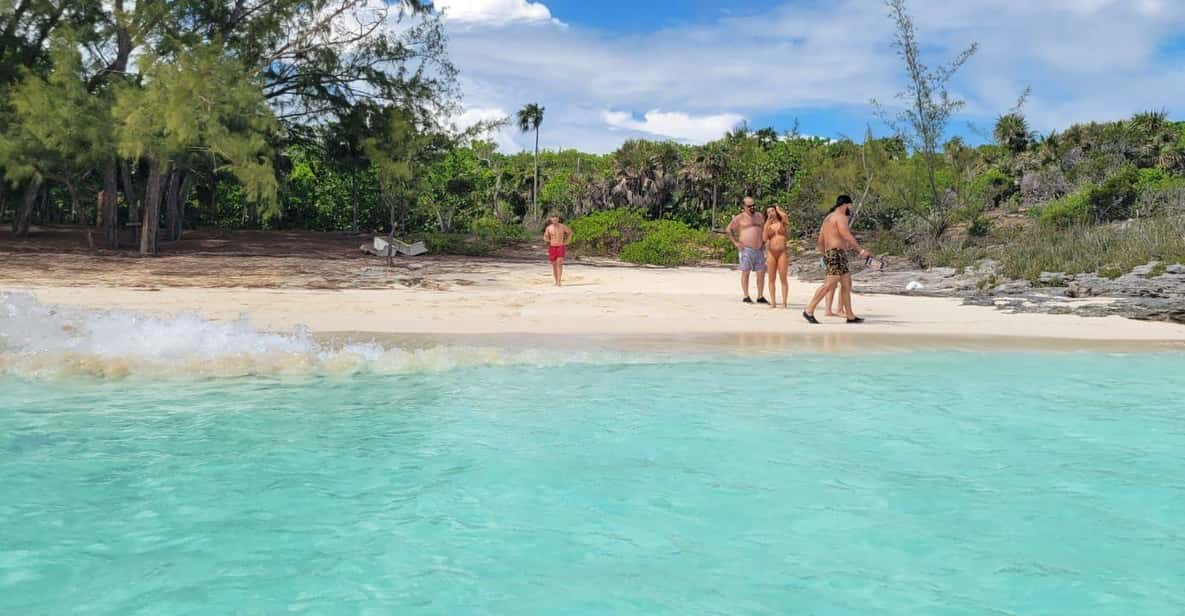
Twenty-five minutes east of Nassau, the water goes from harbour grey to a clear turquoise that announces Rose Island before you see it. The sand is powder-soft, the island has no roads, and a handful of private beach clubs hold the shoreline where the pigs live.
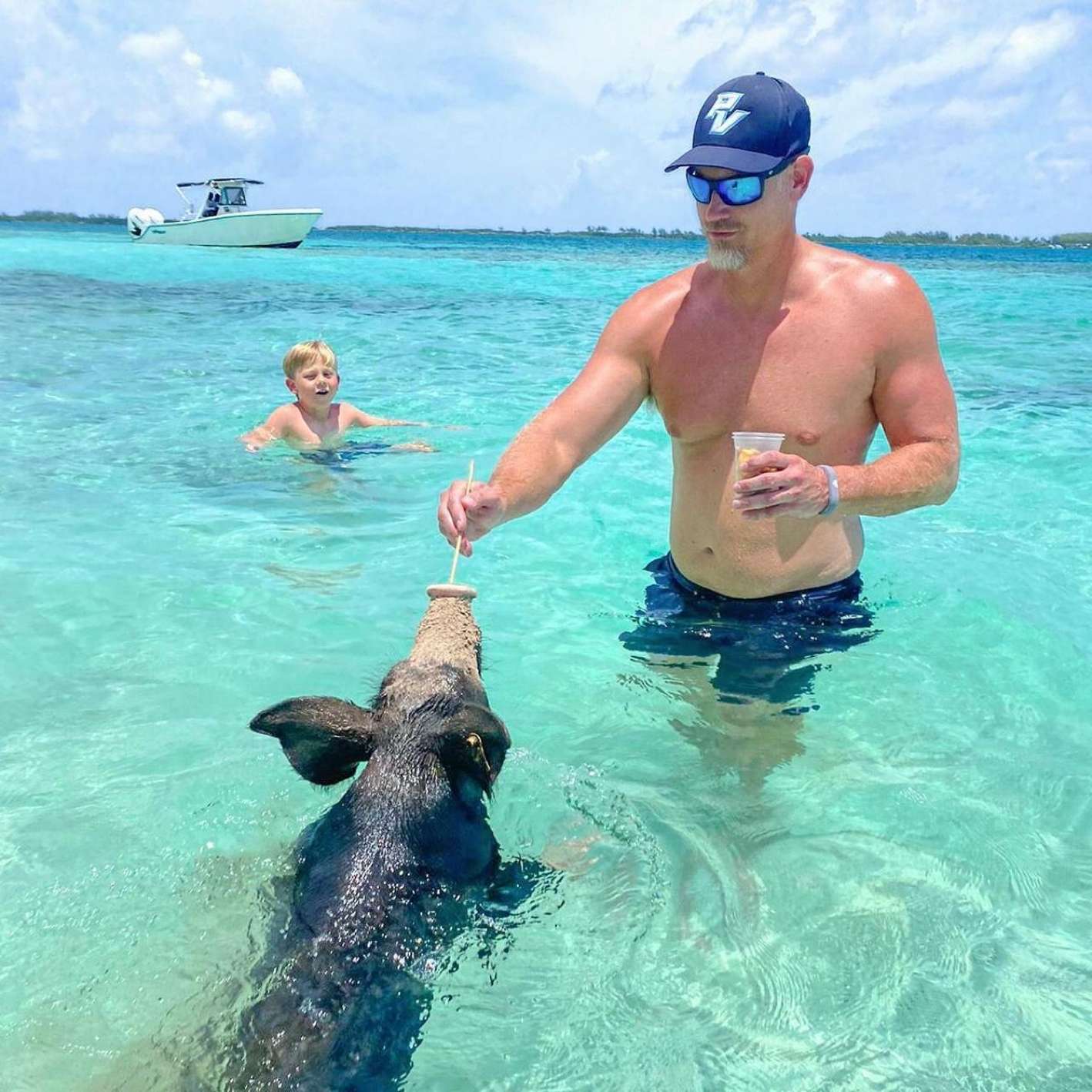
The encounter runs on a schedule. Pigs are released into waist-deep water for a timed session of about 20 to 30 minutes, and staff hand out apple slices on skewers so nobody offers food from an open hand.
Wading, feeding and photos take half an hour; the rest of the day is the island's. You keep two to three hours of beach club, lunch, and a swim on sand that feels like flour underfoot.
The clubs do the comfort work: lounge chairs, hammocks, restrooms, fresh-water showers, a beach bar, kayaks and paddleboards, some with observation decks and volleyball nets. It feels properly out-island even though the cruise gates sit twenty minutes behind you.
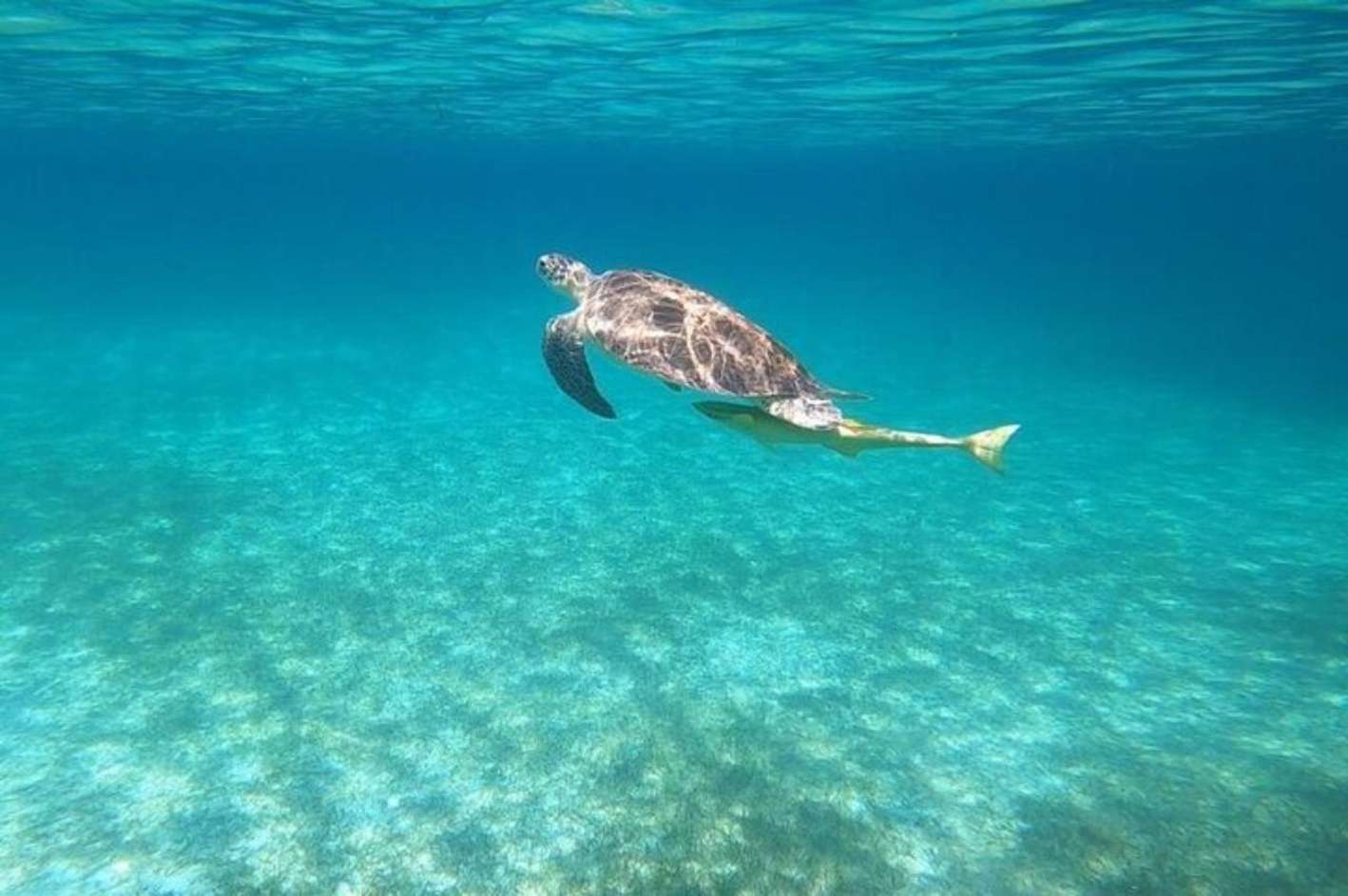
A tour like the "Nassau: Half-Day Swimming Pigs, Reef Snorkel & Beach Club" bundles it all into four hours: the pig swim at your own pace, a coral reef snorkel, turtle watching, and the beach club with loungers and hammocks.
Direct water-taxi trips give you closer to three hours on the island; three-island speedboat routes trade beach time for more stops and a quicker pace.
Operators hold departures when ships run late, and half-day returns leave hours of buffer before all aboard. Winter cold fronts still cancel crossings now and then, and when they do, you get a refund or a new date. The details live in the Rose Island guide.
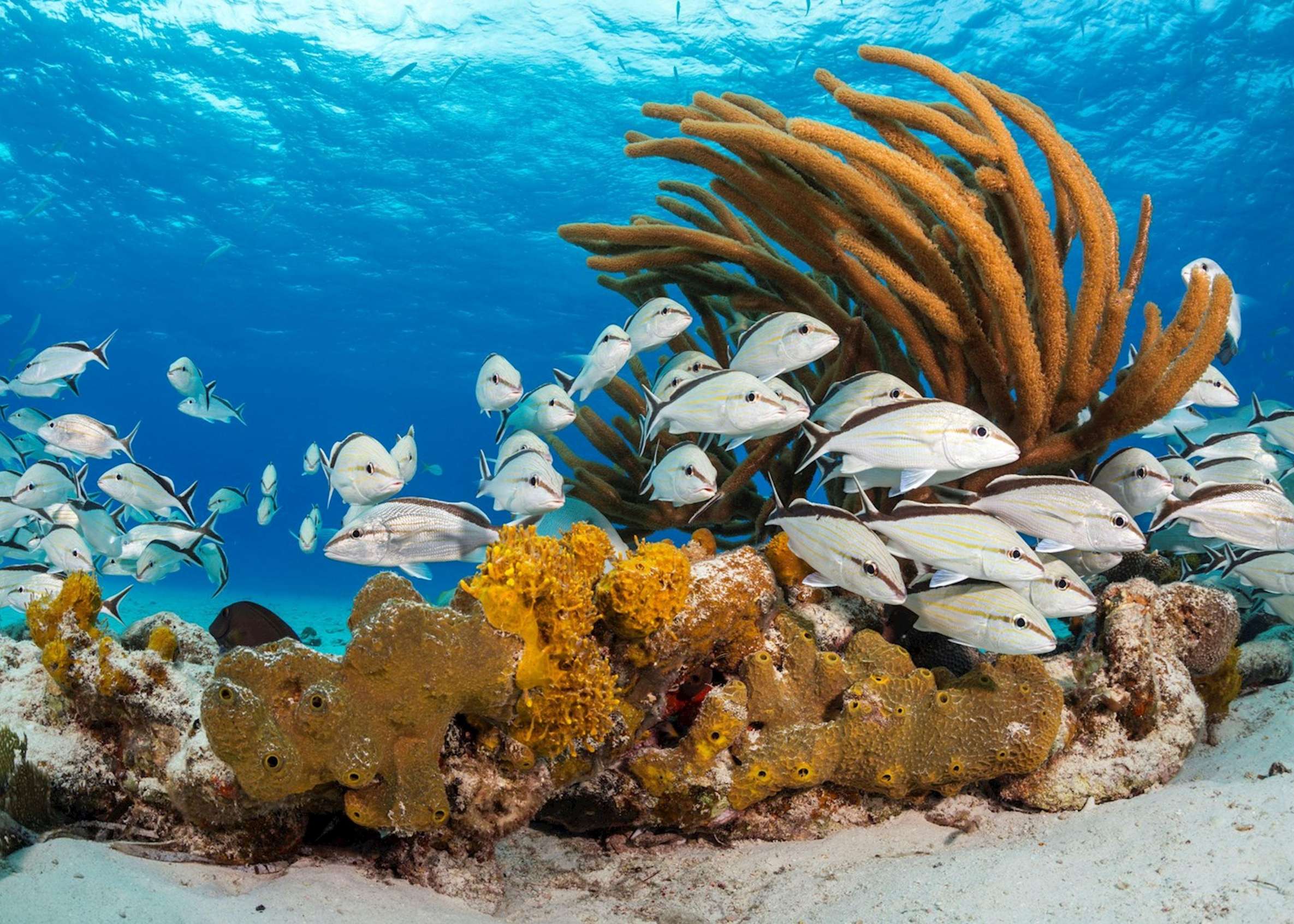
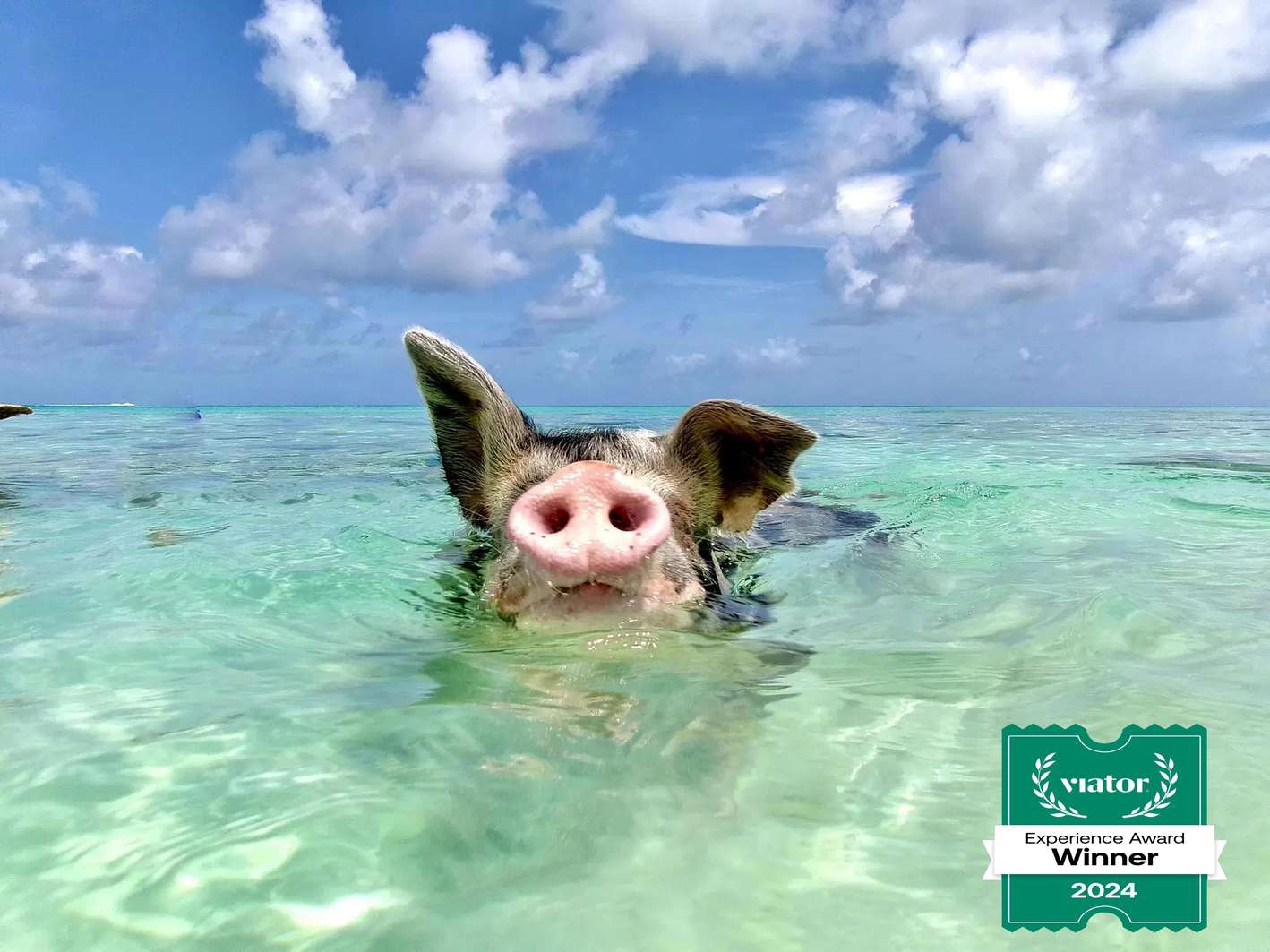
Pearl Island sits a 25-minute catamaran ferry from downtown, and its pigs run their own show: they paddle into the shallows to greet arriving boats or lounge at the waterline, no timetable beyond the tide. A five-minute hop from the island reaches the pigs' own beach.
The package is generous. Round-trip ferry, the pig interaction, a traditional Bahamian lunch and two white-sand beaches come together, along with shaded decks, beach chairs, showers, restrooms and the island's lighthouse.
Kayaks, paddleboards, water mats and a water trampoline are included; lockers and the Aqua Park cost extra. Five-hour tours leave mid-morning and return mid-afternoon, so cruise passengers should hold an hour of buffer against their all-aboard time.
For tighter clocks, one tour operator runs a three-hour express format. The "Nassau: Swimming Pigs Express, Meet & Feed the Famous Pigs" does two islands in under three hours: pig beach for the meet-and-feed, then Pearl Island for beach time and a lighthouse climb.
It is built for cruise guests who want the encounter without giving up the whole day.
Sun Cay offers a quieter variant, 20 to 30 minutes through sheltered harbor waters that stay calm nearly every day of the year, with 20 to 30 minutes of hand-feeding pigs in the surf and the rest of the day for its beaches, pools and an iguana habitat.
Athol Island holds a pig beach minutes from the cruise port.
One correction for anyone staying at the resort hotels across the harbour: no pig encounter exists on that island itself, and no taxi can fix that. The pigs live offshore, and every one of them is reached by boat.
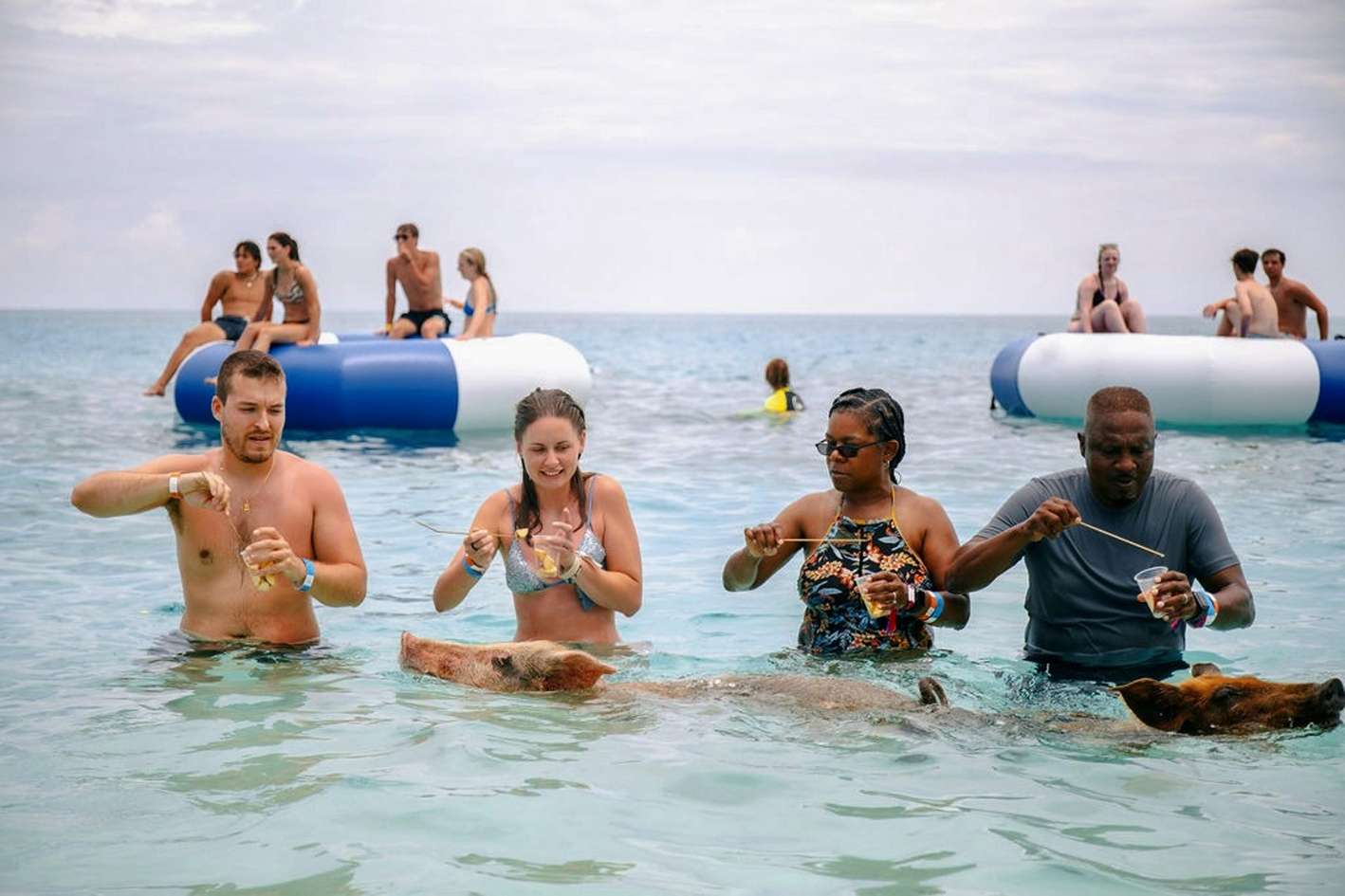
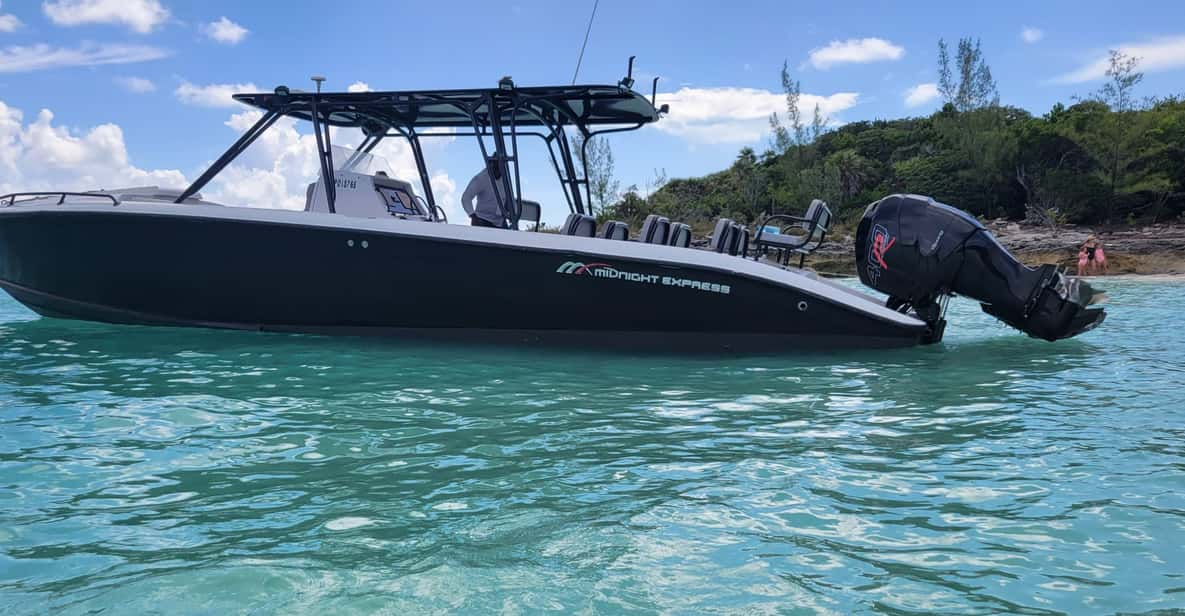
Grand Bahama runs its pig story on land. The colony lives at Crystal Beach along Deadman's Reef on the island's western coast, about 13 to 15 miles from the Freeport cruise harbour, a 30-to-40-minute drive, or roughly 45 to 55 minutes from the Port Lucaya resort strip. No boat crossing required.
The format is structured and brief. Guests get a safety briefing and a skewer of apple chunks, then wade into shallow water while about thirty pigs are released from pens for a feeding session of 30 to 60 minutes.
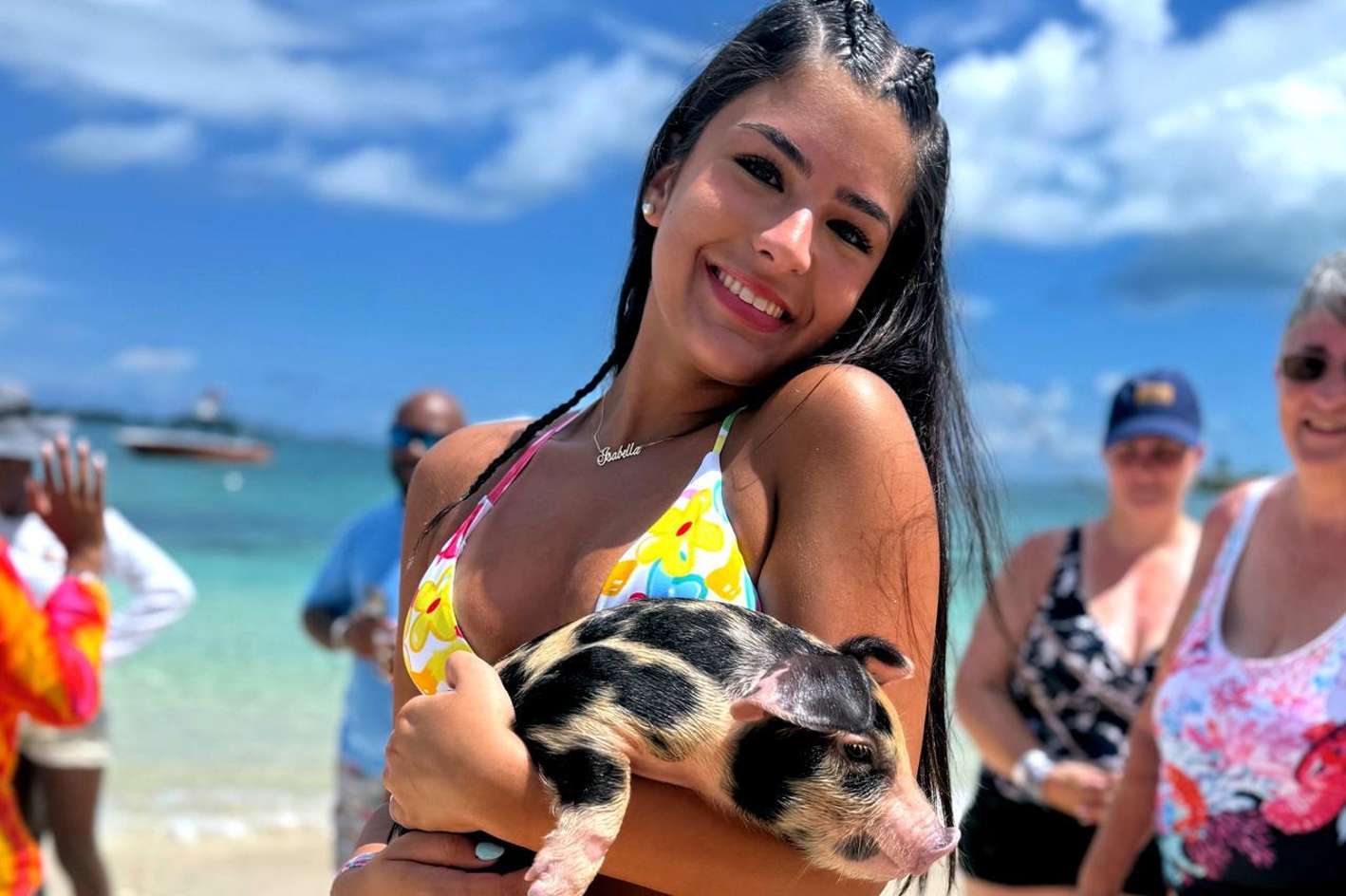
After the water session comes the part families talk about: holding baby piglets for photographs on the sand.
The pigs do their business where they stand, so the same rinse-off routine applies as everywhere else: fresh water after the session, hands washed before eating, head above the surface while you are in the water. Beach entry carries a small fee, and the swim itself is paid separately at the venue.
For anyone docking in Freeport or holidaying on Grand Bahama, this is the whole answer, and a genuinely different one: a drive, a reef, a structured session, no open-water crossing at all.
From a Nassau base, the near-island tours remain the practical choice, because Grand Bahama is a separate island with its own airport and its own clock.
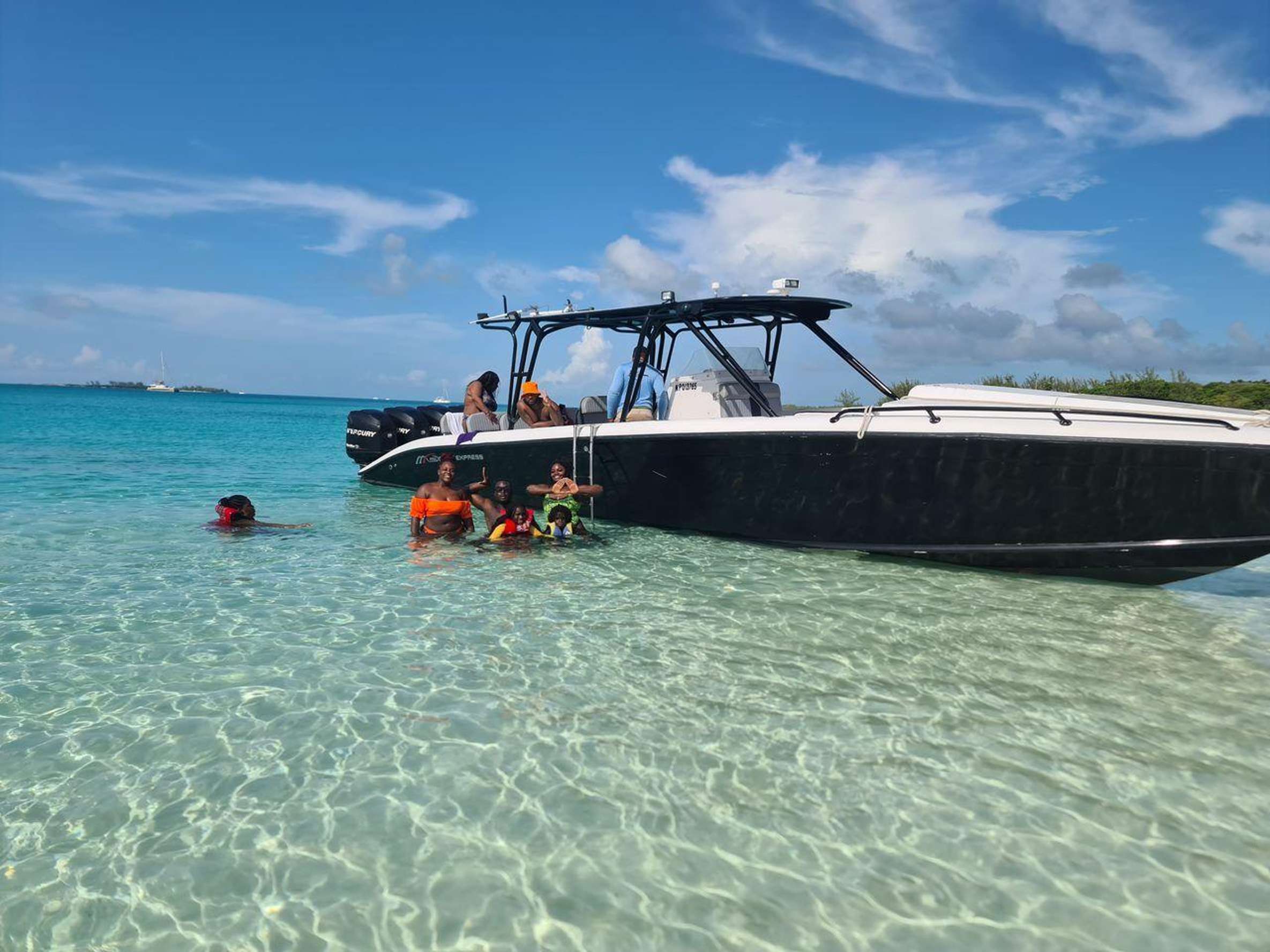
Some readers first meet the swimming pigs on their cruise line's own private island, and the logistics there are unlike anywhere else in the Bahamas.
The pigs themselves live on Treasure Island, a private cay in the northern Berry Islands, kept in beachside paddocks above the sand with fresh water, shade and separate areas for males and females.
From Great Stirrup Cay, Norwegian's island, a speedboat covers the 5-to-10-minute hop; the whole excursion runs about an hour and a half, starting with a safety briefing on a deck before anyone enters the water.
Access is the only real rule here: CocoCay takes Royal Caribbean guests only, Great Stirrup Cay takes Norwegian passengers and select itineraries on its sister lines, and because the island is uninhabited, the pig excursion can only be booked through the cruise line itself.
The Great Stirrup tour also sets a minimum age of five, with anyone under 18 accompanied by an adult.
Travelers arriving by any other means cannot reach these islands at all. If your itinerary calls at one of them, the pig swim is an easy shore excursion booked through the ship; if it does not, the tours from Nassau, Grand Bahama and the out-islands are your route in.
The Bahamas trades on calm water, and most days deliver it. What changes the plan is the winter front: from December through March, cold air sweeping down from North America arrives every five to ten days, shoving the steady easterly trades into gusty westerlies and building steep swells across open water.
The two pig routes feel that very differently. The two-to-three-hour Exuma crossing runs straight through wind-exposed ocean, and front days turn it wet enough that operators reschedule or cancel outright. The 20-to-30-minute run to Rose Island stays largely sheltered, which is one more reason the half-day format holds up in winter.
March: 5 out of 5 for how busy it gets. Spring break marks the busiest month of the year as winter fronts taper off and waters begin to calm.
Tap a month to read it.
October: 2.2 windy days. Quiet tour crowds encounter higher average wind speeds and building waves as autumn weather patterns settle in.
Tap a month to read it.
October: waves up to 0.8 m on an average day. Quiet tour crowds encounter higher average wind speeds and building waves as autumn weather patterns settle in.
Tap a month to read it.
Operators work to wind thresholds. Above 15 knots the Rose Island crossing turns choppy and snorkeling stops come off the itinerary first; above 20 knots, or when winter seas build to six to eight feet, crossings get shortened or canceled.
On those days you get a refund or a new date, so book with a cancellation option and stay flexible. Rose Island's own reef and sand flats give captains sheltered leeward options, so snorkeling usually happens somewhere.
One more clock matters more than the month: the hour. Morning boats between 8 am and 9:30 am find the pigs hungry, active and swimming out to meet the hull, and the shallows at their cleanest.
By the early afternoon departures, the pigs have been fed all morning and prefer sleeping in the shade to performing, though late afternoons sometimes draw fewer boats.
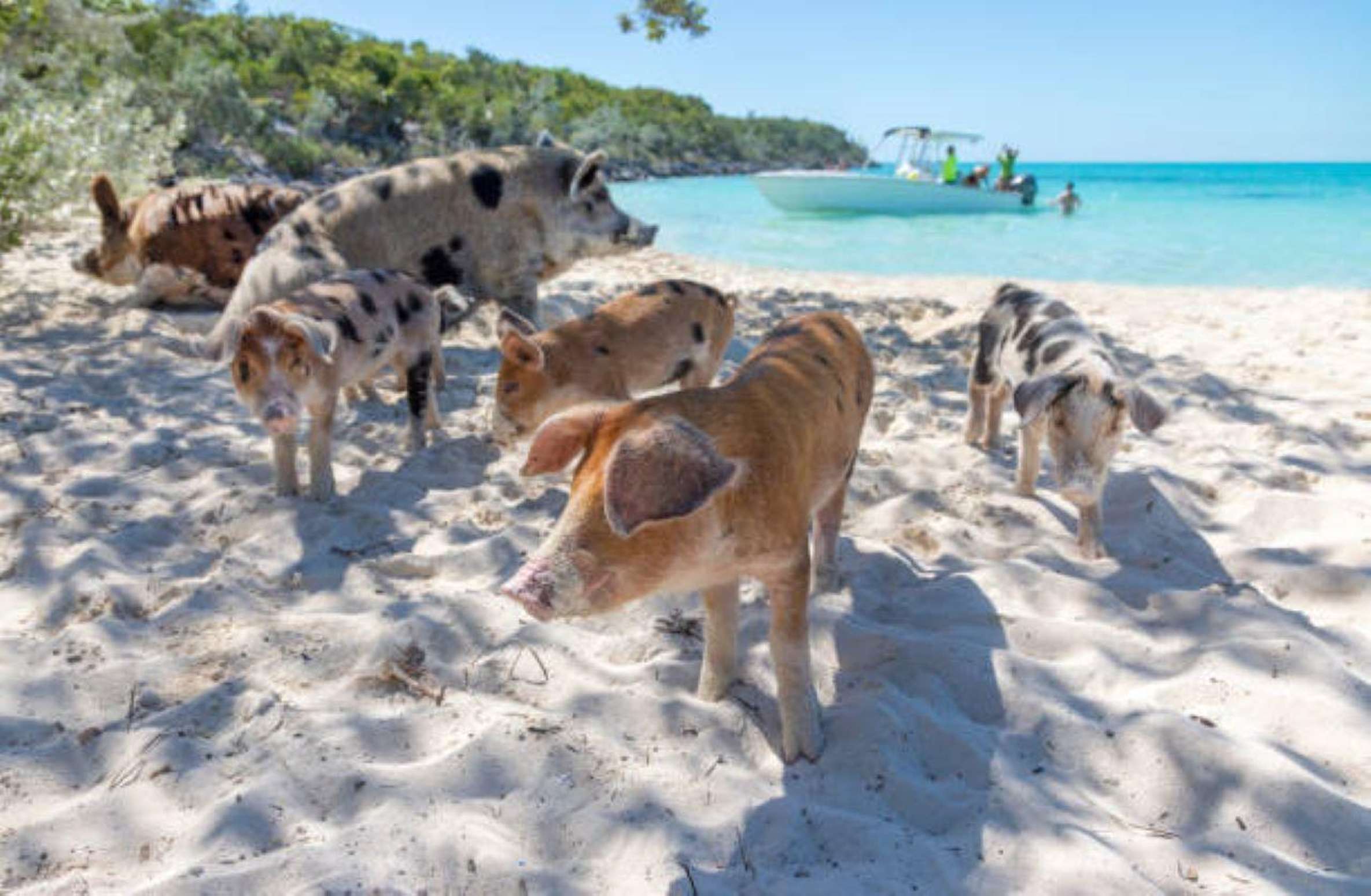
An adult pig weighs hundreds of pounds, and a toddler stands at its eye level. That single image settles most of the safety question before any bacteria enter it. The animals are managed and the encounters are supervised, but the rules exist because the animals are bigger than you.
The water carries the second fact. Pigs relieve themselves in the shallow shoreline water where everyone stands, and attendants scoop what floats with nets.
Fecal bacteria in that water can infect an open cut, so anyone with wounds, scratches or a compromised immune system stays out of the water or keeps the pigs from nuzzling their hands and face. Rinse off at the beach showers before you eat, and keep your head above the surface while you wade.
Open cuts, scratches or a weakened immune system: the shallows carry fecal bacteria that can infect a wound Stay out of the water or cover any cut, keep pigs away from your hands and face, and rinse off and wash your hands before eating
Around food, the animals push. Feed only with skewers held out to the side, show open raised hands when you have nothing, never carry loose snacks into the water, and never ride, grab or pick up a piglet. Bites that break skin are uncommon; nudges and lost balance in the shallows are the everyday risks.
Boat rules screen people too. Pregnant travelers are excluded by nearly every operator running speedboat tours out of Nassau, and certain boats also bar people with back problems, heart or respiratory conditions, epilepsy, or recent surgery, along with children under three on some departures.
Most tours ask you to sign a waiver before boarding, and many set their own minimum ages, since there is no single legal one for the Bahamas.
Families with children under five should weigh the honest advice: the Rose Island beach-club format suits young kids far better than multi-stop speedboats, and an adult holding a small child through the feeding is the sensible play.
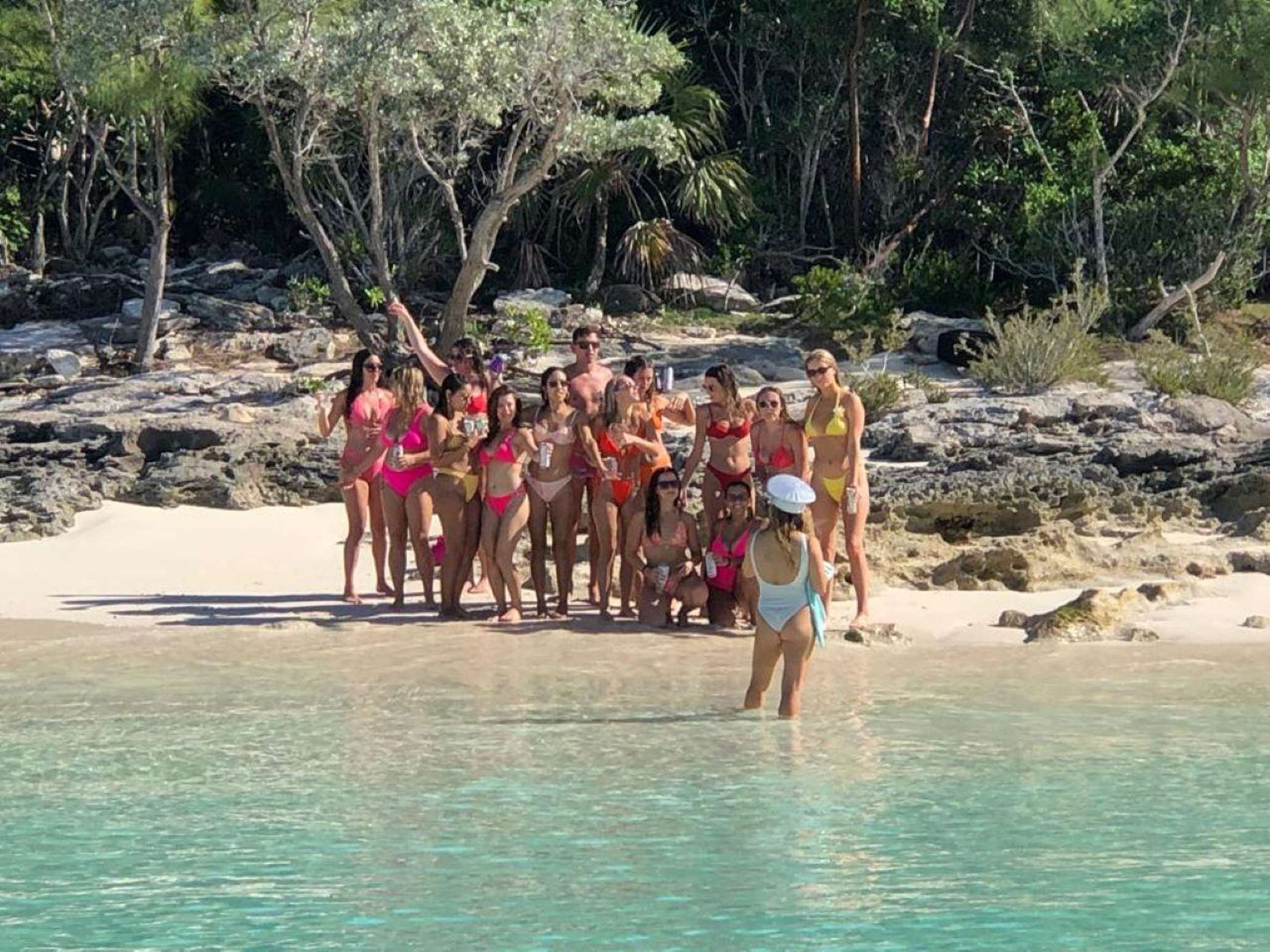
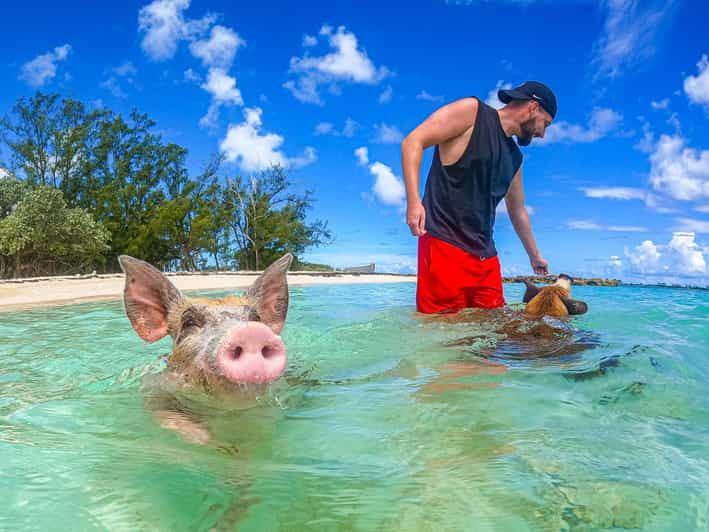
It starts with a briefing. A handler walks the group through the rules of pig etiquette, then everyone steps into knee- to hip-deep water, and the pigs come out to meet them. Apple slices on skewers change hands, the animals paddle close, and the photos begin.
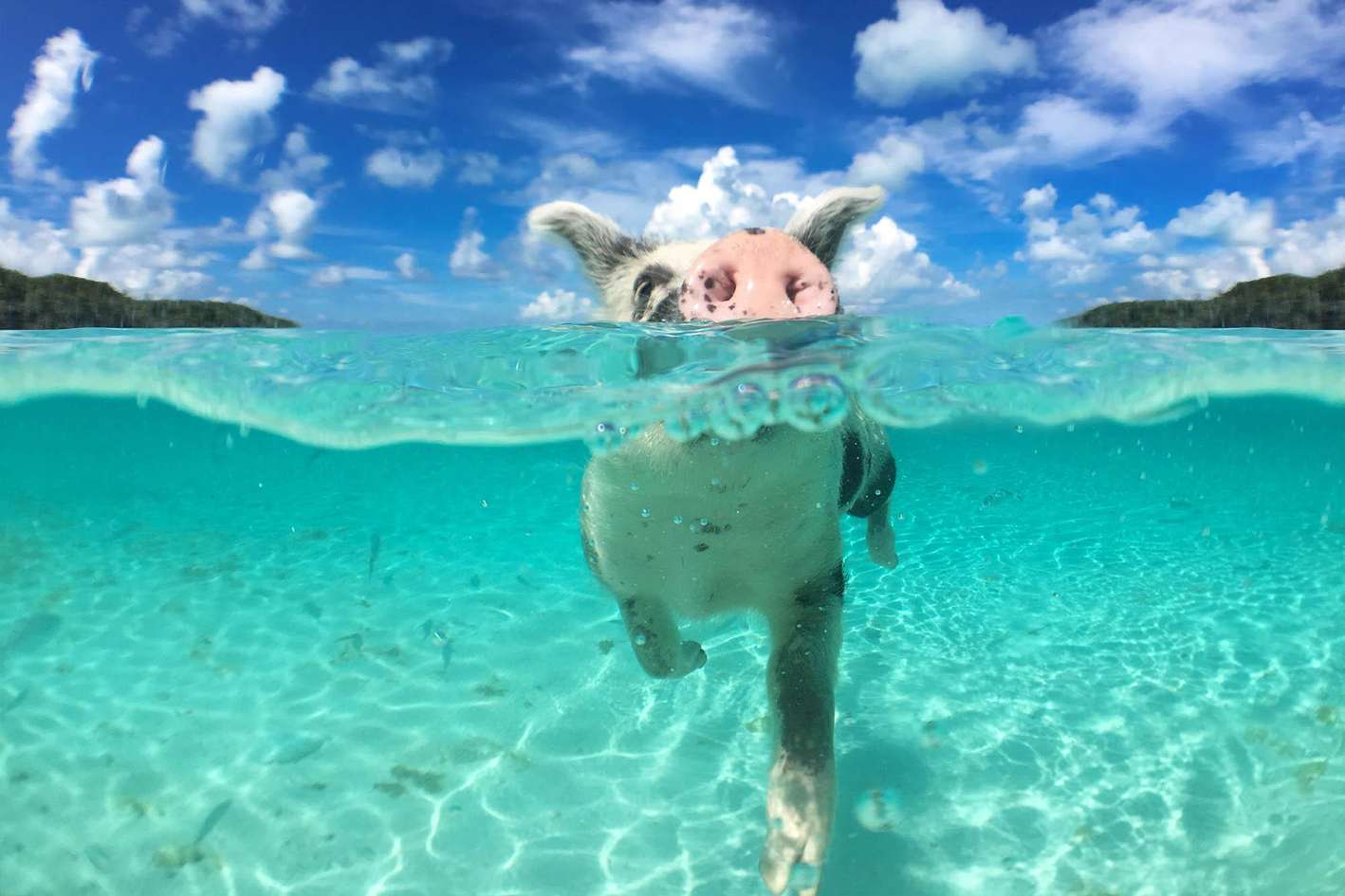
The videos overstate the swimming: most of the encounter is wading, feeding and petting in the shallows. Active time in the water runs 10 to 25 minutes on most tours.
Only a few of the biggest pigs paddle out to the boats; the rest stay near the beach, so expect to meet them standing in the shallows.
What people get wrong comes from the videos, so let the records go straight:
Most of the encounter is wading in knee- to hip-deep shallows, and only a few large pigs paddle out to boats
The pigs on the secondary islands are domestic animals kept on the cays for visitors
They are an introduced domestic species, and the Big Major Cay herd traces to animals brought over in the early 1990s
The animals are domestic, kept on these cays for visitors, strong swimmers who hold their snouts high and cool off in the ocean because pigs cannot sweat. They shade up in peak heat and dust themselves with sand against sunburn, which is why an afternoon session can look sleepy even on a perfect day.
Guides control the menu, handing out sliced apples and skewered snacks rather than letting visitors feed whatever is in their beach bag. Hold the skewer out to the side, keep your hands visible and empty once the food is gone, and the encounter stays friendly from first splash to last photo.
The rest of the day belongs to the island: lunch, a reef, a hammock. Go expecting a half-hour with remarkable animals and time to fill the day around it, and the encounter over-delivers.
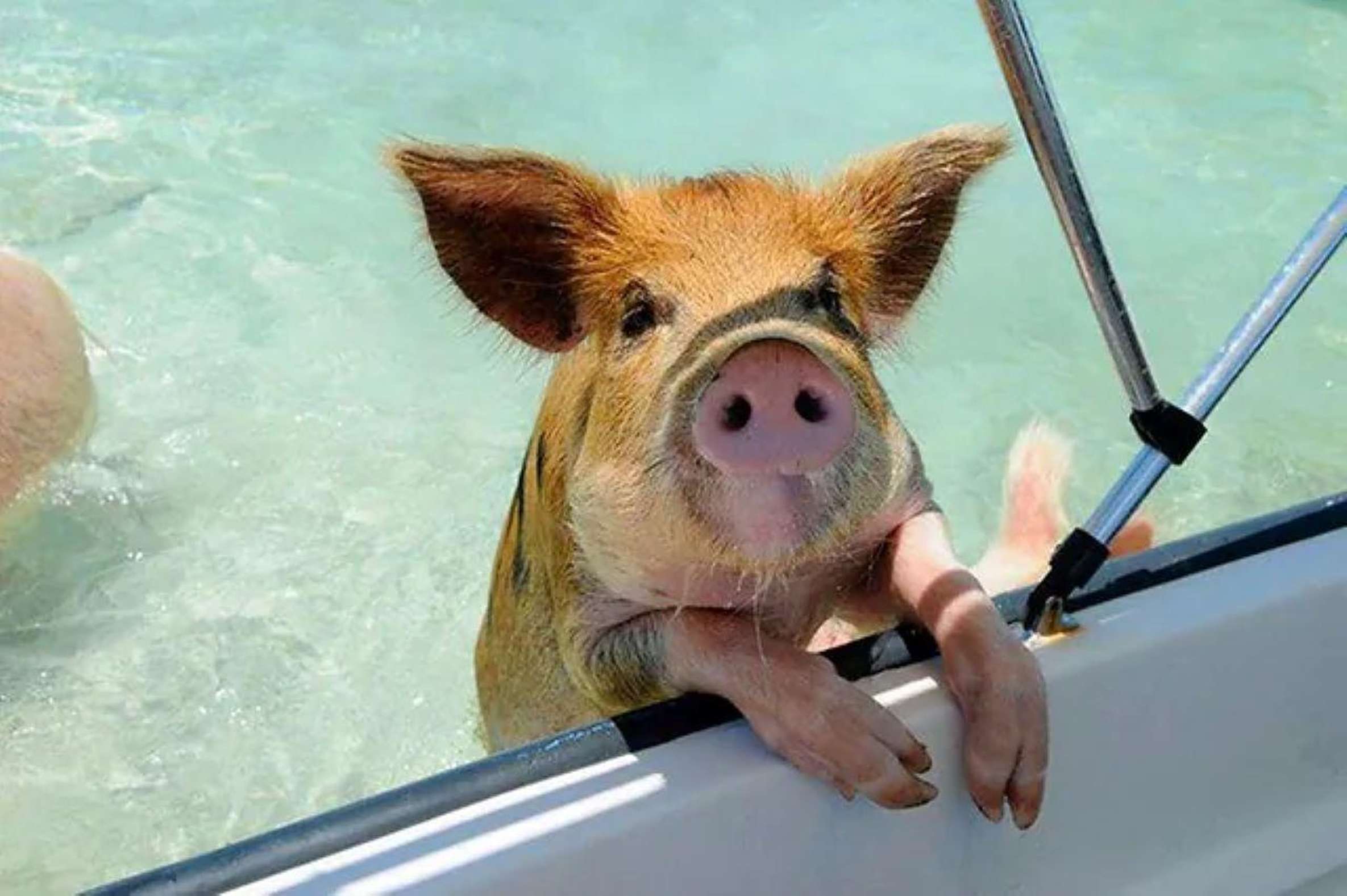
Two trips share a name and sit at opposite ends of a day. The full-day Exuma excursion, with its open-water crossing and its sandbar, shark and iguana stops, runs to several hundred dollars a head.
The half-day near-island trips out of Nassau cost a fraction of that, and the express formats sit at the low end. Before comparing anything else, confirm which island the itinerary names; that single line separates the two experiences.
Then read what is bundled. Lunch and drinks vary tour by tour: some include rum punch and a full meal, others serve a light lunch and leave the bar as cash, and on some departures the pig interaction itself is an add-on paid at the island.
Child pricing varies operator by operator; some carry young children free, others charge the same fare at any age, so read the child policy on your specific tour rather than assuming a family discount.
Timing decides availability more than price does. From December through April, Nassau pig tours typically sell out two to four weeks ahead, and spring break departures go four to six weeks out. Book early, and keep the free-cancellation window intact in case a front moves your date.
| Check | Why it matters | Our pick |
|---|---|---|
| The island named on the itinerary | A Nassau pig trip and an Exuma trip are different days entirely | Names Rose, Athol and Pearl Islands plus Green Cay |
| What food and drink comes along | Beach bar tabs run on cash when card terminals fail | Lunch and rum punch are included |
| The return time against all aboard | A late return can cost you your ship | Four hours door to dock, with hours of buffer |
| The child policy | Some tours carry young children free, others charge full fare | Check availability for the ages in your group |
One line of the "Nassau: 3 Islands Tour, Snorkel, Pig Beach, Turtles & Lunch" answers most of this checklist at once: three island stops, a reef snorkel, the Green Cay turtles, lunch and punch included, four hours door to dock, free cancellation up to 24 hours out, and pickup available.
Tips for the captain and crew are never included on most boat tours; carry cash, since Bahamian and US dollars trade one to one.
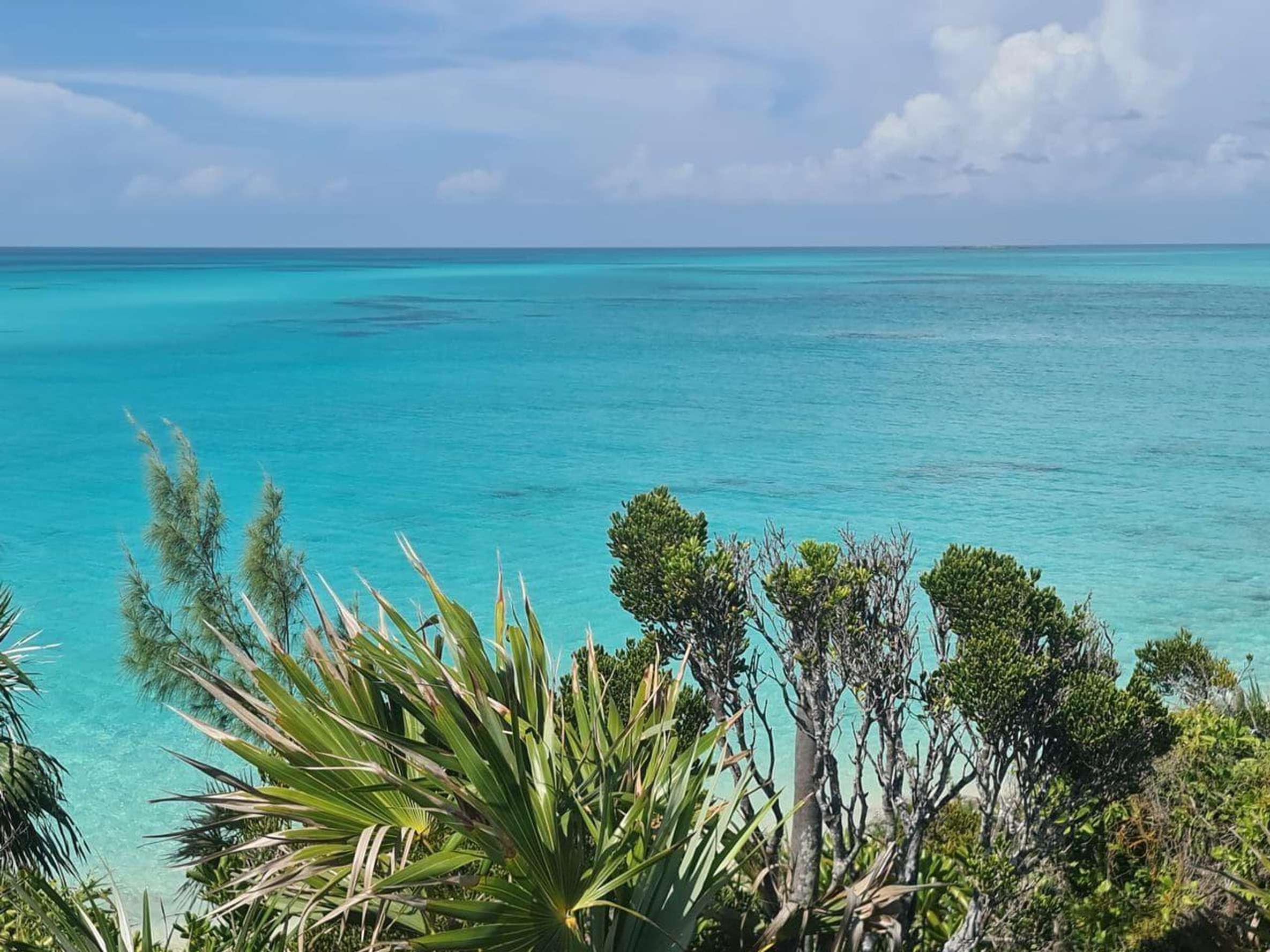
The last mile is the easiest part, which surprises cruise passengers braced for a logistics problem.
Downtown departures sit practically at the port gates: boats leave from Woodes Rogers Walk a one-minute walk from the exit, from the waterfront by Señor Frog's about four minutes west, and from Elizabeth on Bay roughly five minutes east. Most pig tours board within a short walk of Prince George Wharf.
Some departures cross the harbor instead, from a ferry terminal on the far side. A taxi covers the bridge in 7 to 10 minutes; walking the high bridge takes about half an hour, and the harbor water taxis run too irregularly to bet a morning departure on.
Coming back from a tour that returns around 4 pm, figure 10 to 15 minutes by taxi to the cruise port.
Keep two things handy: your cruise SeaPass card, which security checks when you re-enter the terminal, and your all-aboard time with an hour of buffer built in for harbor congestion and the walk through the terminal.
Operators watching cruise schedules will hold a boat for a late-arriving ship, but the buffer is still yours to manage.
If you board early or return with time to spare, the waterfront pays for the wait. Conch salad stalls at Potter's Cay under the bridge, a cold drink at a harbor-side bar, and sights like Fort Fincastle or the Queen's Staircase sit within a short ride or a 20-minute walk:
The right island is the one your schedule can hold. Cruise passengers and families do best on a half-day Rose Island trip: pigs, a reef and a beach club inside four hours.
With a full free day, spend it on the original colony at Big Major Cay, where the long crossing buys sandbars, nurse sharks and the wildest setting in the Bahamas. Otherwise Grand Bahama, Pearl Island or the cruise-line islands each offer their own way in.
pigs sell out 2-4 weeks ahead in spring
morning tours, hungrier pigs
Short answers to the questions people ask most before they pick an island and book a boat.
 Nassau2026
The famous colony lives on Big Major Cay in the Exumas. Closer to Nassau, pigs are hosted on Rose Island, Athol Island, and Pearl Island. You can also find them at Crystal Beach on Grand Bahama, at Meeks Patch near Spanish Wells, and on Long Island.
Big Major Cay in the Exumas is recognized as the official home of the Bahamas swimming pigs. The island is uninhabited, and about 20 pigs and piglets live there free-roaming. No one knows for sure how they arrived, though legends point to sailors or a shipwreck.
Usually no. The crossing takes 1 to 3 hours each way across 82 to 89 miles of open water, and round-trip tours run 8 to 9 hours. Standard cruise calls last 7 to 9 hours, and multiple operators refuse cruise passengers outright. Only a port stay of 10 hours or more makes it workable.
The pigs on tours out of Nassau are domestic animals kept on local cays, and the free-roaming herd at Big Major Cay is a separate story. All the Bahamas swimming pigs are an introduced domestic species, so none of them are native Bahamian wildlife.
A session starts with a safety briefing, then you wade into knee- to hip-deep water to feed, pet, and photograph the pigs. Active time in the water typically lasts 10 to 25 minutes, with the rest of the tour given over to snorkeling, beach time, and lunch.
Adult pigs weigh hundreds of pounds and can step on bare feet or nip at visitors holding food. Excursions are not recommended for toddlers and children under 5 to 7. Keep children supervised and behind you when large pigs approach in the water.
Check the specific island, cay, departure point, and return route on the itinerary. Rose Island tours are half days with roughly 25 to 30 minutes of boat transit each way. Trips to Big Major Cay run a full day and need multi-hour open-ocean crossings or a day flight to Staniel Cay.
Some Nassau and Rose Island speedboats bar pregnant women and people with epilepsy or mobility impairments, and a few restrict travelers with back, heart, or respiratory conditions. Rules vary by operator, so check before booking if a condition applies.
Rose Island runs as a half-day trip after a 20- to 30-minute sheltered crossing, with a beach club, reef stops, and turtles. Exuma takes 6 to 8 hours and crosses open ocean, but adds sandbars, iguanas, nurse sharks, and clearer water.
Read the itinerary and note the specific island, cay, and departure point. A near-Nassau trip takes half a day with a short crossing, while a Big Major Cay trip runs all day with multi-hour open-water transit or a flight to Staniel Cay.
It works best when you value the boat ride and beach time as much as the pigs themselves. Pairing the encounter with lunch, snorkeling, or a beach club turns a short visit into a full half-day outing.
Operators cancel or shorten runs when winds push past about 20 knots or winter seas build. When a trip is called off for weather or sea conditions, you get a full refund or the option to reschedule.
turtles at green cay on the same boat
Three islands, snorkeling, turtles and lunch on Rose Island in one four-hour day. Free cancellation up to 24 hours in advance makes it easy to lock in.